
How to Communicate Change to Stakeholders Effectively
Five-step guide to identify stakeholders, tailor messages, choose timing and channels, enable feedback and measure results to drive change adoption.

Effective communication is the backbone of successful organisational change. Without it, uncertainty, resistance, and disengagement can derail even the most well-planned initiatives. Research shows that only 34% of change efforts succeed, often because leaders fail to communicate clearly and consistently.
Here’s how to ensure your communication strategy drives commitment and trust:
✓ Understand your stakeholders: Identify who’s affected, their concerns, and their influence. Use tools like stakeholder mapping to categorise and prioritise effectively.
✓ Tailor your messaging: Different groups care about different things. Focus on the “why” and “what’s in it for me” to make messages relevant and impactful.
✓ Plan timing and channels: Align communication with project phases and use a mix of methods - face-to-face for complex topics, digital tools for reinforcement.
✓ Encourage dialogue: Create opportunities for feedback through surveys, workshops, and Q&A sessions. Act on input to build trust.
✓ Evaluate and refine: Measure results using clear metrics like engagement and behaviour changes. Adjust your approach based on feedback and performance.
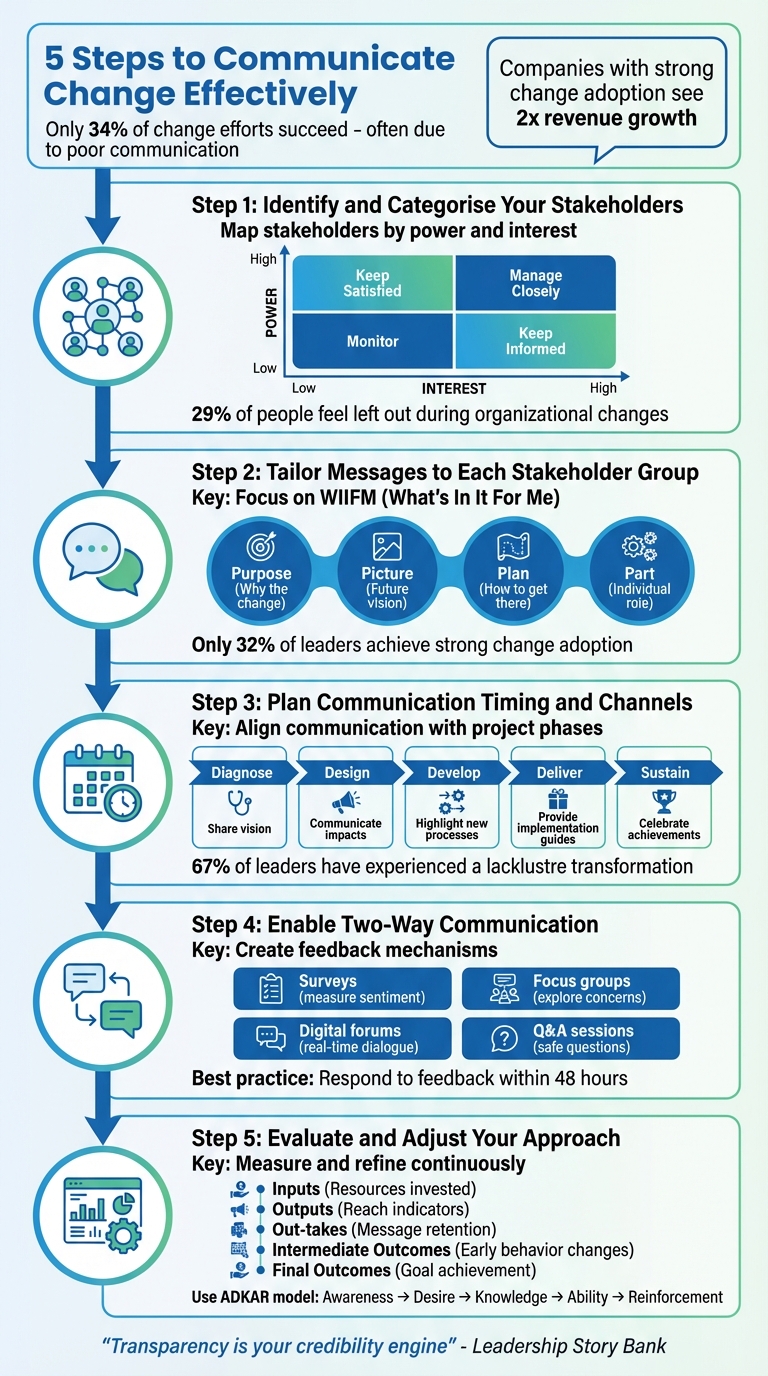
5-Step Framework for Communicating Organizational Change to Stakeholders
How Great Leaders Communicate Change (Most Miss This Crucial Step)
Step 1: Identify and Categorise Your Stakeholders
Before diving into any change initiative, it’s crucial to identify who your stakeholders are. These are the individuals or groups who either affect, influence, or are influenced by the change - think senior executives, project teams, customers, suppliers, and even regulatory bodies. Research shows that major organisational changes happen roughly every three years, yet 29% of people feel left out during such transitions. This sense of exclusion can lead to resistance even before the change process begins.
Map Your Stakeholders
Start by asking yourself: Who holds the power? Who could block progress? Who is essential to success? Who controls key resources like budget, staffing, or IT? These questions help create a thorough stakeholder register that includes more than just the obvious players.
Once you’ve identified them, categorise your stakeholders. Internal stakeholders often include senior leadership, project teams, and departments like HR, Finance, or IT. External stakeholders might be customers, suppliers, business partners, and regulatory bodies. Don’t forget governance groups, such as steering committees or management boards, and influencers like trade unions, media, or early adopters. Spotting "change champions" - those early adopters who can provide ground-level insights and help spread the message - can be especially helpful.
Assess Stakeholder Influence and Interest
A 2x2 matrix is a handy tool for classifying stakeholders by their power and interest, helping you decide how to engage with each group. This approach breaks stakeholders into four categories:
- Manage Closely: High power, high interest.
- Keep Satisfied: High power, low interest.
- Keep Informed: Low power, high interest.
- Monitor: Low power, low interest.
It’s worth noting that power doesn’t always come from formal authority. Informal influence - like the expertise of a subject matter specialist or the deep knowledge of someone with years of experience - can be just as important. Emotional investment also plays a role; for instance, someone deeply attached to a project they’ve nurtured may require a tailored approach.
As Vivian Kloosterman, Managing Director of VK Consulting, explains:
"Using a matrix which maps stakeholders according to their influence and interest allows you to paint a picture of your stakeholders' level of involvement".
Stakeholder dynamics aren’t static, so it’s essential to revisit and update your analysis regularly. Once you’ve clearly identified and categorised your stakeholders, you’re ready to tailor your communication to address their specific needs effectively.
Step 2: Tailor Messages to Each Stakeholder Group
After mapping out your stakeholders, the next hurdle is creating messages that truly connect with them. Research shows that only 32% of leaders achieve strong change adoption, often because generic communication fails to address the specific concerns of different groups. The secret lies in focusing on what matters most to each audience.
Understand Stakeholder Concerns
Before you start drafting messages, take the time to understand what each group cares about most. Tools like surveys, interviews, focus groups, and workshops can help uncover their fears, motivations, and priorities. Pay attention to open-ended questions during discussions, and don’t overlook subtle non-verbal cues like tone and body language. You can also monitor internal platforms like Yammer to spot recurring themes or friction points.
At the heart of your messaging should be the question: "What's In It For Me?" (WIIFM). As Tim Creasey, Chief Innovation Officer at Prosci, puts it:
"The first time a change is communicated, people will immediately think about how the change will impact them and won't be able to focus on any other details of the change".
If you can’t clearly explain how the change benefits individuals - or at least how it will affect them personally - your communication will fall flat.
It’s also crucial to address emotional as well as logical concerns. The "Elephant and Rider" analogy is a helpful way to think about this: the Rider represents the logical reasons for the change, while the Elephant reflects the emotional drivers that spark genuine engagement. Stakeholders may feel anything from excitement to anxiety or fear. Acknowledge these emotions openly instead of brushing them aside. Once you’ve captured these insights, you’ll be better equipped to craft messages that resonate with each group.
Develop Messages That Address Their Needs
When you know what matters to your stakeholders, you can build targeted messages that hit the mark. A handy approach is the "4 Ps" of Change Communication:
- Purpose: Explain why the change is happening.
- Picture: Paint a clear image of what the future will look and feel like.
- Plan: Lay out how the organisation will move from the current state to the desired one.
- Part: Clarify what each individual needs to do to contribute to success.
The emphasis on each "P" will depend on the stakeholder’s role. Senior leaders, for example, need a strategic overview of the "why" and the big-picture vision, while frontline teams require practical, step-by-step guidance on how the change impacts their daily work.
Equally important is deciding who delivers the message. Employees generally expect to hear the broader business rationale from executives or senior leaders, but they look to their immediate supervisors for details on how the change will affect them personally. Equip managers with resources like toolkits, Q&A sheets, and coaching so they feel prepared to handle team-specific concerns.
Steer clear of corporate buzzwords and vague phrases like "continuous improvement" that often fail to convey real meaning. Use straightforward, plain language to explain exactly what’s changing, when it will happen, and why it matters. Before rolling out messages on a larger scale, test them with smaller groups to ensure they resonate as intended. The effort pays off - companies with strong change adoption report revenue growth rates twice as high as those with weaker adoption. Getting your messaging right is a worthwhile investment.
Step 3: Plan Communication Timing and Channels
Once you've refined your messages, the next step is to decide when and how to share them. Even the most carefully crafted messages can fall flat if delivered at the wrong time or through the wrong medium. Research highlights this risk: one in four change initiatives fail due to poor communication, and 67% of leaders have experienced a lacklustre transformation in the past five years. By building on the stakeholder-specific messages from Step 2, this stage ensures your communication is delivered in a timely and impactful way.
Create a Communication Timeline
Start planning your communication strategy from the very beginning and align it with the project's various phases. For instance:
- Diagnose phase: Share the vision and reasons driving the change.
- Design phase: Communicate how specific teams will be affected.
- Develop phase: Highlight new processes and ways of working.
- Deliver phase: Provide practical guides and resources for implementation.
- Sustain phase: Celebrate achievements and share lessons learned.
Avoid leaving stakeholders in the dark. Even if there's no significant update, let them know - this helps prevent speculation and misinformation. An editorial calendar can be a valuable tool here, allowing you to match communication themes to project milestones. For example, Month 1 could emphasise the "why" through town halls and intranet posts, while Month 2 shifts focus to "what's changing" via team meetings and digital signage.
To maintain trust and momentum, establish a standard practice of responding to feedback within 48 hours.
Choose the Right Communication Channels
With a timeline in place, the next step is choosing the best channels for your tailored messages. The right channel depends on both the message itself and the audience. For change initiatives, face-to-face communication - whether in person or via video - is often the most effective, especially for sensitive or complex topics. However, employees have specific preferences about who they want to hear from. Executives and senior leaders are expected to explain the business rationale, while immediate supervisors are trusted to discuss personal impacts.
Different channels suit different purposes:
- Town halls or all-staff meetings: Ideal for sharing the overall vision.
- One-on-one conversations: Best for discussing role-specific changes or addressing sensitive feedback.
- Workshops and focus groups: Useful for gathering input and fostering dialogue.
- Email or newsletters: Reinforce key facts and provide additional resources.
- Intranet or Q&A forums: Offer accessible information and allow for anonymous questions, particularly for remote teams.
A multi-channel approach works best. For example, deliver key messages face-to-face, then follow up with written communication to ensure clarity and provide a reference point. Equip managers with resources like toolkits, FAQs, and talking points to help them communicate consistently within their teams. Regularly review the effectiveness of your channels through quick pulse surveys (around five questions) to check if your messages are reaching people and encouraging engagement.
Step 4: Enable Two-Way Communication
Change communication shouldn’t be a one-way street - it thrives as a dialogue. While Step 3 focused on planning your timing and channels, this step is about creating opportunities for stakeholders to share their thoughts. Major change initiatives may not happen often, but their impact is profound. Listening to stakeholder feedback ensures your messages stay relevant and credible. When people feel genuinely heard, resistance can turn into support, and you might even uncover unexpected allies to strengthen your plans.
Set Up Feedback Mechanisms
From the start, establish clear and accessible ways for stakeholders to share their input. This helps curb rumours and keeps the conversation grounded in facts. Choose your feedback tools based on what you need to achieve:
- Surveys and questionnaires: Great for gathering measurable data from larger groups, helping you track overall sentiment.
- Focus groups and workshops: These provide a space for more detailed discussions, allowing you to explore emotional reactions and specific concerns face-to-face.
- Digital forums: These platforms enable real-time, informal dialogue. Leaders can join ongoing conversations and address trending topics directly.
- Q&A sessions and email bulletins: They offer a safe environment where stakeholders can ask questions and receive clear answers.
A practical example of this approach comes from the UK Government's "GREAT" team during the 2014 International Festival of Business in Liverpool. They appointed a stakeholder manager to coordinate with partners, ensuring structured feedback throughout the project. This collaborative effort led to partnerships with Trinity Mirror and BT, a sponsored supplement with Virgin Trains, and drew over 75,000 business delegates from 88 countries to 424 events.
Once feedback channels are in place, your next step is to act swiftly on the input you receive.
Respond to Feedback Promptly
Feedback only becomes valuable when it leads to action. After gathering input, identify key themes and concerns, and clearly communicate how this feedback has shaped your updated plans. By closing the loop, you show stakeholders that their input truly matters and build trust. Regular updates also help prevent speculation and misinformation.
Use a mix of channels to respond effectively. Some stakeholders might prefer open Q&A sessions, while others feel more comfortable submitting questions anonymously via digital platforms. Assign relationship leads who can provide consistent, personalised responses. Address concerns by tying your replies to the 4 Ps of change communication.
"If you genuinely engage with their concerns and give them a sense that they matter, you could change the atmosphere and establish stronger support for change." - NCVO
Honesty is key. Avoid sugar-coating or over-promising, as this can undermine your credibility. If conflicts or disagreements arise, tackle them quickly through a transparent process to prevent them from derailing progress. Finally, take time to celebrate shared achievements and acknowledge the support stakeholders have provided. Recognising their contributions helps maintain momentum and commitment as you move forward.
Step 5: Evaluate and Adjust Your Communication Approach
Effective communication during change is not a one-and-done task; it requires constant review and fine-tuning. Success in change initiatives is rare, making it vital to regularly assess how your communication strategies are performing. The PROOF principle - Pragmatic, Realistic, Open, Objective, and Fully integrated - is a helpful framework for these evaluations. As the Government Communication Service aptly puts it, "If you can't measure the activity, don't do it".
Measure Communication Results
To track your progress, combine quantitative data with qualitative insights. Start by setting SMART objectives to create clear baselines for measurement. Focus on these five key categories:
- Inputs: Resources invested, such as costs and staff hours.
- Outputs: Indicators of reach, like intranet visits or email open rates.
- Out-takes: Measures of how well messages are remembered and whether attitudes are shifting.
- Intermediate Outcomes: Early behavioural changes, such as increased training sign-ups or more blog comments.
- Final Outcomes: The ultimate achievement of organisational goals.
Pair these metrics with qualitative feedback from focus groups or internal sentiment analysis. The ADKAR model can also guide your evaluation, helping you map stakeholders’ progress through Awareness, Desire, Knowledge, Ability, and Reinforcement. For instance, if surveys show high awareness but low desire, you might need to shift your messaging to focus on what the change offers stakeholders personally. Engaging Change Champions can further provide real-time insights into how your communication is being received. Once you’ve gathered your data, use it to refine your approach.
Adjust Your Approach Based on Results
When your evaluations reveal gaps or issues, act swiftly. Monitor internal social platforms to spot emerging trends or concerns. Unaddressed communication voids can lead to stakeholders filling the gaps with their own assumptions and rumours. To avoid this, test revised messages with smaller groups before rolling them out more widely, ensuring clarity and minimising misunderstandings.
Take the case of Rakuten’s "Englishnization" initiative, where CEO Hiroshi Mikitani mandated a two-year transition for 7,100 Tokyo employees to conduct business in English. Early feedback showed employees felt "afraid, frustrated, and oppressed" by the change. In response, the company adjusted its strategy by funding language learning programmes to better support employees during the transition. This example underscores the importance of honest evaluation and quick adaptation to keep initiatives on track.
If line managers are struggling to communicate effectively, provide them with detailed briefing packs and practical tools. RAG status reporting - using Red, Amber, and Green indicators on dashboards - can also help you quickly identify underperforming channels or messages. Finally, ensure you close the loop by sharing updates and improvements with stakeholders to maintain trust and transparency.
Conclusion
Communicating change effectively isn’t just about delivering updates; it’s about building trust, maintaining engagement, and fostering alignment. These elements are crucial, especially when only 34% of change initiatives succeed and a mere 32% of leaders achieve strong employee adoption rates.
The five steps shared in this guide - identifying stakeholders, tailoring messages, planning timing and channels, enabling two-way dialogue, and evaluating your approach - offer a practical framework. By following these steps, you can turn routine announcements into opportunities for meaningful engagement. Yet, success depends on how well these steps are executed. As Leadership Story Bank aptly puts it:
"Transparency is your credibility engine."
Communicating early, listening attentively, and acting on feedback helps eliminate the silence that often leads to fear and speculation. Addressing critical questions like “why” and “what’s in it for me” shifts people from passive observers to active participants. This not only strengthens leadership credibility but also connects strategic goals with daily actions. Through these efforts, stakeholders become fully engaged in the process, reinforcing the key themes explored earlier.
Organisations that excel in adopting change see double the annual revenue growth. This success doesn’t come from messaging alone - it’s about weaving change into the fabric of daily operations. Embedding change into everyday practices drives far greater results than relying on one-off motivational efforts.
FAQs
What’s the best way to map and categorise stakeholders during a change initiative?
To effectively organise and understand your stakeholders, start by pinpointing everyone who will be affected by or has the ability to influence the change. Depending on the context, this could include employees, volunteers, trustees, funders, or external collaborators.
The next step is to assess each stakeholder’s influence, interest, and potential reaction to the change. Think about their needs, expectations, and perspectives to help you focus your efforts where they matter most. Once you’ve gathered this information, group stakeholders into categories such as:
- High influence/high interest
- High influence/low interest
- Low influence/high interest
- Low influence/low interest
Your communication strategy should be tailored to fit each group. For instance, stakeholders with both high influence and high interest will likely need frequent updates and opportunities to be actively involved. On the other hand, those with lower interest may only require occasional updates. This structured method ensures your communication remains focused and effective, keeping stakeholders engaged throughout the process.
What are the most effective ways to communicate complex changes to stakeholders?
When dealing with complex changes, choosing the right communication channels is key to ensuring clarity, engagement, and trust. Face-to-face interactions, such as town halls or stakeholder meetings, work well for encouraging open dialogue and directly addressing any concerns. These settings allow for immediate feedback and foster a sense of connection.
To complement these, written communications - like detailed emails or reports - are invaluable for creating a clear, accessible record of the changes. They ensure everyone has consistent information to refer back to, reducing the chance of misunderstandings.
For larger groups or teams spread across different locations, webinars and workshops provide an effective way to explain the reasoning behind the changes and manage emotional reactions. These formats also promote collaboration and help align diverse stakeholders. By combining these methods, you can adapt your communication to suit different audiences, ensuring your message is both clear and well-received.
How can I evaluate the effectiveness of my change communication strategy?
To measure how well your change communication strategy is working, concentrate on a few critical areas: how well stakeholders understand the message, how aligned they are with the goals, and whether their behaviours reflect the intended changes. Look out for signs of engagement, like active participation in discussions or tangible actions, and gather feedback to see if your message is hitting home.
Check regularly to ensure stakeholders feel informed, supported, and motivated throughout the change process. You can do this through surveys, one-to-one chats, or team meetings. Keep in mind that communication isn't just about sharing information - it's about sparking the right outcomes and maintaining trust along the way.