
Body Language for Diverse Leadership Settings
Practical body-language tips for leaders: eye contact, posture, gestures and virtual presence for one-to-one, team, formal and cross-cultural settings.

Body language can make or break your leadership presence. It’s not just about standing tall or maintaining eye contact - it’s about tailoring your nonverbal cues to different situations and people. Whether you’re addressing a team meeting, presenting to executives, or navigating virtual calls, your gestures, posture, and expressions send powerful signals about your confidence, approachability, and authority.
Here’s what you need to know:
✓ Eye contact builds trust: Maintain steady but natural eye contact to show attentiveness and create psychological safety.
✓ Posture conveys confidence: Stand or sit upright, with open gestures and uncrossed arms to appear engaged and approachable.
✓ Tailor your approach: Adjust your tone, gestures, and expressions based on your audience - what works for a boardroom may not resonate with a creative team.
✓ Virtual presence matters: In online meetings, look into the camera for eye contact, keep your gestures within frame, and ensure your background is tidy.
✓ Avoid common pitfalls: Fidgeting, inconsistent eye contact, or mismatched gestures can undermine your message.
From one-on-one chats to international presentations, aligning your body language with your words ensures clarity, connection, and confidence. Use these practical tips to refine your nonverbal communication and lead effectively in any setting.
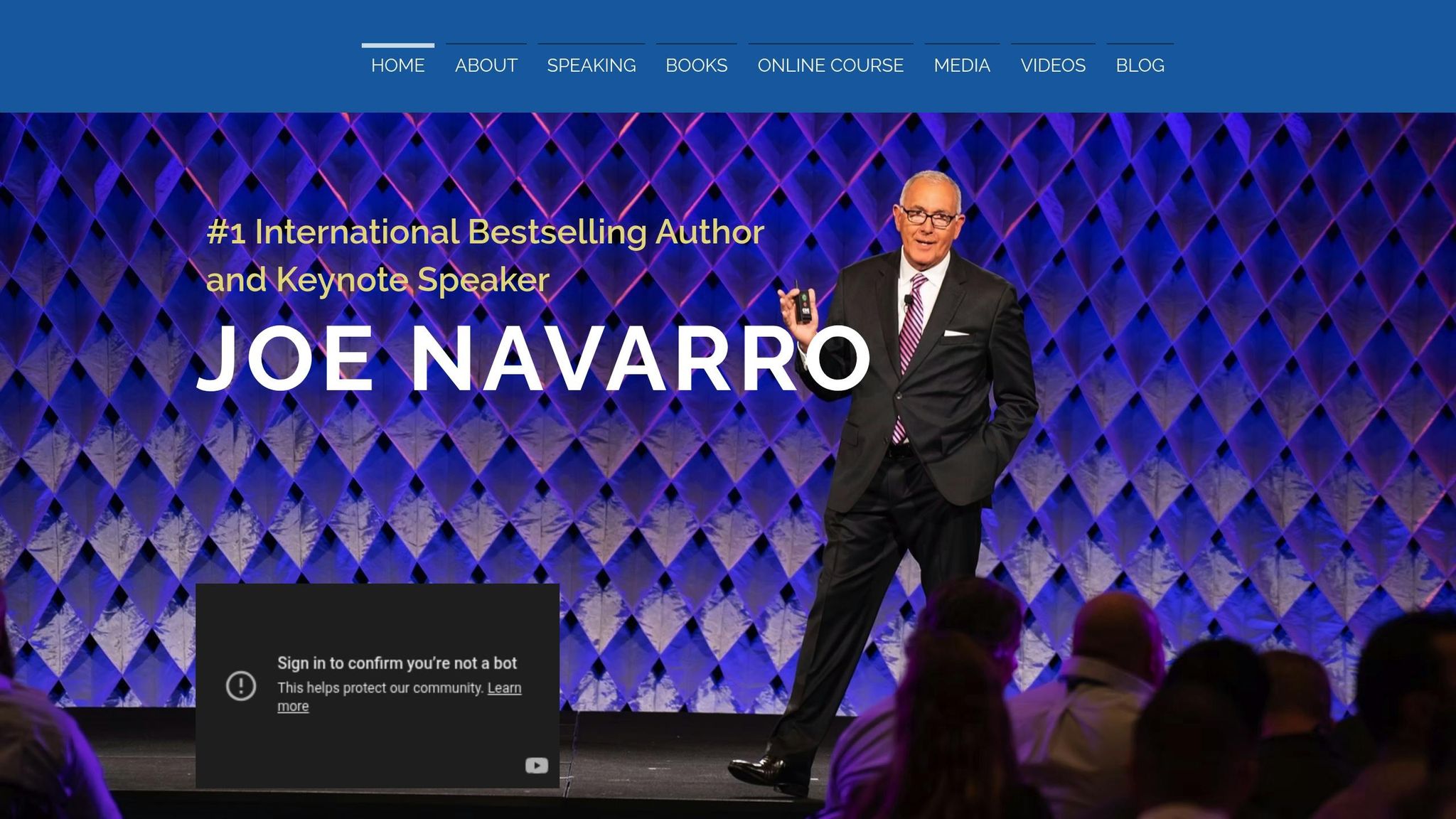
Command Presence: The Body Language of Leadership | JOE NAVARRO
Core Elements of Body Language
Body language is made up of seven key components: facial expressions, eye contact, posture, gestures, proximity, touch, and voice. These elements work in harmony to shape how others perceive you, reinforcing your message and building trust. Think of them as tools that, when used effectively, create a strong and cohesive presence.
Facial Expressions and Microexpressions
Your facial expressions set the tone for any interaction. A warm smile conveys friendliness and approachability, while a frown signals seriousness or concern. These subtle cues can influence the mood of a meeting before you even speak. To strengthen your communication, align your facial expressions with the message you're delivering. For example, show genuine concern during serious discussions or enthusiasm when celebrating achievements.
Microexpressions, however, are trickier to manage. These fleeting, involuntary facial movements can reveal your true feelings, even if they contradict your spoken words. For instance, a brief look of doubt while delivering a confident message can undermine your credibility. Similarly, mismatched expressions during a tense conversation may suggest uncertainty or hesitation.
The goal isn’t to suppress all emotion. Instead, focus on becoming more aware of your expressions and practise controlling them, especially in challenging situations. This balance allows you to appear composed and professional without seeming detached. Tailoring your expressions to different audiences is an essential skill for effective communication.
Posture and Gestures
The way you hold yourself speaks volumes about your confidence and engagement. Standing tall with your feet shoulder-width apart, shoulders back, and body facing your audience conveys authority and readiness. On the other hand, slouching or turning away can signal disinterest or a lack of confidence.
Gestures also play a crucial role. Use deliberate, clear movements to emphasise your points. Holding a gesture for a few seconds ensures it feels intentional, while avoiding fidgety or repetitive motions maintains your audience’s focus. Open palm gestures, for example, invite trust and openness, whereas crossed arms or hidden hands can create barriers and signal defensiveness.
Even when seated, you can project confidence through open body language. Lean forward slightly to highlight key points, then lean back to show control and composure. Striking a balance between assertiveness and relaxation is essential - whether addressing executives or collaborating with creative teams.
Be mindful of gestures that might detract from your message. Pointing directly at someone can seem aggressive, and overly dramatic movements may distract. Instead, opt for purposeful hand gestures that support your words without overshadowing them.
Eye Contact and Engagement
Eye contact is a powerful way to build connections and establish credibility. Maintaining consistent eye contact not only fosters engagement but also creates a sense of psychological safety, making people feel valued and included. This can be particularly impactful for individuals who may feel marginalised, such as racial minorities or introverts.
In Western business settings, steady eye contact signals confidence, honesty, and attentiveness. However, finding the right balance is key. Avoiding eye contact may come across as disinterest, while excessive staring can feel confrontational. A good approach during presentations is to make eye contact with various individuals in the room, creating a sense of connection with the entire audience.
Cultural norms around eye contact vary widely. While direct eye contact is often expected in the United Kingdom, some cultures may interpret it as disrespectful or overly assertive. Understanding your audience’s cultural background and adjusting accordingly is crucial.
In virtual meetings, the strategy shifts slightly. Look directly at the camera lens rather than at the screen to simulate eye contact with your audience. Although it may feel unnatural at first, this technique helps create a stronger sense of connection. The benefits of eye contact remain consistent, whether in person or on video calls.
In one-on-one conversations, combine steady eye contact with nodding and leaning forward. This combination demonstrates active listening and encourages open, honest dialogue.
Vocal Tone and Silence
Your voice is a vital aspect of body language, extending far beyond the words you use. A steady, confident tone conveys authority, while speaking too quickly can make you seem anxious. Measured, deliberate speech shows thoughtfulness and control.
Pausing strategically is an often-overlooked but highly effective communication tool. A brief silence before delivering important points can create anticipation and draw attention to what follows. During presentations, pairing a pause with movement - such as walking to a new spot - can make your message more memorable.
In virtual settings, verbally signalling importance before a pause can help emphasise critical points and encourage quieter team members to engage. For example, saying, "This is key", followed by a pause, ensures your audience focuses on what comes next.
Silence can also help you avoid filler words like "um" or "uh", which can weaken your message. Embracing silence as a tool, rather than fearing it, adds clarity and impact to your communication.
Body Language Checklists for Different Settings
Adjusting your body language to fit the context is a powerful way to enhance your leadership. Below are tailored tips for various settings, helping you project confidence and build meaningful connections.
One-on-One Conversations
Private discussions call for warmth and attentiveness. Your aim is to foster trust and psychological safety. Studies highlight that increased eye contact during one-on-one interactions can boost team members' sense of inclusion and reduce feelings of isolation, particularly for introverts and racial minorities.
• Minimise physical barriers: Sit at an angle rather than directly across a desk. Keep your posture open - relaxed shoulders, uncrossed arms - and lean slightly forward to show you're actively listening.
• Use steady eye contact: Engage with your conversation partner, but don't overdo it if they seem uncomfortable.
• Reinforce engagement: Nodding while they speak encourages them to continue and shows you're fully present.
Incorporate open-palmed gestures to signal honesty and trustworthiness. Match your facial expressions to the tone of the conversation - show empathy during tough moments and enthusiasm when celebrating successes. Repeating or reflecting their words can also strengthen the connection. These small but deliberate adjustments enhance trust and rapport in one-on-one settings.
Team Meetings
Team meetings require balancing authority with inclusivity. Position yourself where you can see everyone, and adopt a tall, open stance. Use visible, purposeful gestures to encourage participation and create a safe space for ideas.
• Engage with eye contact: Look at different team members to make everyone feel included.
• Emphasise key points: Use deliberate hand movements, but avoid exaggerated gestures that could distract.
• Move intentionally: Shifting to different areas of the room and pausing before key statements can add weight to your message.
Mirror the positive and relaxed body language you want to see in your team. Asking for feedback on your nonverbal communication can also help you refine your approach. These strategies create an environment where everyone feels valued and heard.
Formal Presentations
When delivering formal presentations, your body language should command attention without overwhelming your audience. Stand tall with shoulders back to project confidence, and avoid slouching, which can signal insecurity.
• Use purposeful movements: Step forward to emphasise important points, and use open arm gestures to signal inclusivity.
• Engage the audience: Make eye contact with different sections of the room to build trust and connection.
• Match gestures to your message: Controlled, natural movements enhance your credibility, while overly dramatic gestures may distract.
Pausing before critical points can help draw attention to your message. Tailor your body language to your audience - executives may prefer a more restrained style, while creative groups might appreciate a livelier approach. Practising in front of a mirror or recording yourself can help fine-tune your delivery.
International and Cross-Cultural Audiences
Body language varies widely across cultures, so understanding your audience's norms is crucial to avoid missteps and demonstrate respect.
• Adapt eye contact: While direct eye contact is valued in many Western cultures, it can be seen as disrespectful in some Asian, African, and Latin American contexts.
• Be mindful of gestures: Signals that are acceptable in the UK might be offensive elsewhere. When in doubt, opt for conservative gestures and observe your audience's reactions.
If you're unsure about specific cultural nuances, err on the side of formality and adjust based on your audience's responses. This approach shows respect and helps build trust across cultural boundaries.
Virtual and Hybrid Settings
In virtual environments, your "digital body language" becomes just as important as your in-person presence. Nonverbal cues are interpreted differently through a screen, so deliberate adjustments are key.
• Camera positioning: Place the camera at eye level and look directly at the lens to simulate eye contact. Keep upper-body gestures within the frame for clarity.
• Posture and expressions: Sit upright with your shoulders back, and ensure your facial expressions match your message to convey warmth and professionalism.
• Background and lighting: A clean, well-lit background enhances your presence and creates a positive impression.
In hybrid meetings, make an effort to engage both in-person and virtual participants. Strategic silence can also be a useful tool - pausing after a question can encourage more thoughtful responses. Beyond video calls, your email tone, response time, and overall etiquette contribute to your digital presence and influence how others perceive your leadership.
These adjustments ensure your leadership style translates effectively, whether in person, on screen, or across cultural divides.
Common Body Language Mistakes and How to Fix Them
Even seasoned leaders can fall into nonverbal communication habits that unintentionally undermine their authority or erode trust. Recognising these patterns is the first step, and with consistent effort, they can be corrected to strengthen your presence and connection with others.
Slouching and Closed-Off Posture
Slouching or hunching over can suggest insecurity or lack of confidence, while crossing your arms often creates a physical barrier that signals defensiveness. To project confidence and openness, focus on standing or sitting upright - keep your shoulders back, spine straight, and feet firmly planted. Keep your arms uncrossed and your hands visible to foster approachability and openness.
Inconsistent or Inadequate Eye Contact
Studies show that leaders who maintain eye contact encourage greater engagement and participation from their teams. Avoiding eye contact can come across as disinterest or detachment, which may undermine psychological safety, particularly for individuals from diverse backgrounds where norms around eye contact can differ. Aim to make direct eye contact with different people for a few seconds at a time, rather than focusing on just one person or avoiding it altogether.
Nervous Habits Like Fidgeting
Behaviours like tapping your fingers, shifting your weight, or fiddling with objects can signal anxiety and detract from your authority. Instead of simply trying to suppress these habits, replace them with intentional movements. Use open-handed gestures to emphasise your points, and ensure your posture is balanced, with your weight evenly distributed when standing.
Gestures That Don't Match Your Message
Misaligned gestures can confuse your audience and dilute your impact. For instance, pointing directly at someone may feel confrontational, while overly small gestures might seem hesitant. Match your gestures to your message - use open-handed movements to convey honesty or step forward and expand your arms to show decisiveness and inclusivity. Adjust the size and intensity of your gestures based on the setting and the importance of your message.
Appearing Closed-Off During Difficult Conversations
In tense or challenging discussions, body language can either build bridges or create walls. Turning your body away or crossing your arms signals defensiveness and can hinder collaboration. Instead, position yourself slightly angled rather than directly across from the other person. Lean in slightly when they speak to show active listening and genuine interest, and maintain steady eye contact to reinforce your engagement.
Vocal Tone Mistakes
Your voice should complement your body language. Speaking too quickly can suggest nervousness, while abrupt or overly loud tones may create distance, even if your posture is open. Strive for a steady, measured pace and a calm, composed tone. This balance helps convey thoughtfulness and authority, ensuring your message resonates.
Forced or Insincere Mirroring
While subtle mirroring - like nodding or adopting a similar relaxed posture - can strengthen rapport, overdoing it can feel artificial and erode trust. Authenticity is key. Use mirroring naturally and sparingly to connect with others, particularly when addressing diverse teams, as genuine nonverbal cues reinforce your credibility as a leader.
Taking a Proactive Approach
Improving your nonverbal communication takes practice and self-awareness. Seek feedback from your team to gain an external perspective on your habits, and use a mirror to observe your posture and facial expressions. Even the way you enter a room or greet people can set the tone for a meeting. By addressing these common missteps, you can ensure your body language consistently aligns with the message you want to convey.
Conclusion
The way you carry yourself - your posture, eye contact, and gestures - plays a pivotal role in fostering trust and connection within your team. While the core principles remain the same - maintaining an open posture, engaging eye contact, deliberate gestures, and expressive alignment between your words and facial expressions - their application should shift depending on the audience and setting, as highlighted in our checklists.
Studies reveal that consistent eye contact boosts engagement, particularly with individuals who may often feel overlooked. The key lies in developing self-awareness and ensuring your nonverbal signals genuinely support your message rather than contradict it.
Whether you're in one-on-one conversations, team discussions, boardroom presentations, international engagements, or virtual meetings, your gestures should reflect the context. For example, executives might appreciate measured, restrained movements, while creative teams might respond better to more animated expressions. The ability to adjust your approach while staying authentic to your own style is essential and ties back to the strategies discussed earlier in this guide.
To refine this skill, start by identifying and replacing defensive habits - like crossing your arms, avoiding eye contact, or fidgeting - with intentional, confident movements. Use the five C's framework we introduced earlier to guide your practice:
- Confidence: Show self-assurance through your posture.
- Credibility: Align your gestures and tone with your message.
- Connection: Build rapport through purposeful eye contact and gestures.
- Clarity: Avoid movements that might distract or confuse.
- Consistency: Ensure your verbal and nonverbal communication work together seamlessly.
As you grow more confident internally, using these body language techniques will feel more natural over time. With practice, deliberate gestures will become second nature, enabling you to project presence and influence in any leadership scenario.
For further insights on commanding presence, visit Leadership Story Bank.
FAQs
How can I adapt my body language to suit different cultural contexts in international meetings?
Adapting your body language during international meetings plays a key role in building connections and ensuring your message is understood across different cultural settings. Begin by doing your homework on the cultural norms of the people you’ll be interacting with. For instance, while steady eye contact might signal confidence in some cultures, in others, it could come across as too intense or confrontational.
Pay close attention to gestures, as their interpretations can differ greatly. Take the thumbs-up gesture - what’s seen as positive in one country might be considered inappropriate in another. Similarly, respect personal space preferences. Some cultures embrace close physical proximity during conversations, while others may find it uncomfortable and prefer more distance.
By staying alert to these nuances and being open to feedback, you can fine-tune your non-verbal communication, making it more inclusive and effective. These small but thoughtful changes can go a long way in fostering understanding and mutual respect.
How can I use effective body language to stay engaging during virtual meetings?
Maintaining engaging body language during virtual meetings is crucial for keeping your audience focused and ensuring your message lands effectively. Start by sitting upright and positioning your camera so you're at eye level - this helps create a stronger sense of connection. Incorporate natural hand gestures to highlight key points, but ensure they stay within the camera's view to avoid unnecessary distractions.
Your facial expressions play a big role too. A warm, approachable demeanour goes a long way - smile when appropriate and use slight nods to demonstrate active listening. Be mindful of your posture; avoid crossing your arms or leaning too far back, as these can unintentionally signal disinterest. Finally, a clean, well-lit background adds to your professional image, helping to reinforce your credibility and focus.
How can I become more mindful of my microexpressions and ensure they complement what I’m saying?
Paying attention to your microexpressions begins with tuning into your emotions and noticing how they might subtly reveal themselves on your face. Try spending time in front of a mirror or recording short videos of yourself speaking. This allows you to assess whether your facial expressions align with the tone and message you want to convey.
To create consistency, aim for open and friendly expressions. This might include relaxed eye contact and a slight, natural smile when it fits the context. Be mindful of habits like frowning or avoiding eye contact, as these can unintentionally suggest unease or lack of interest. Seeking regular feedback from colleagues or mentors you trust can also provide valuable insights to refine your non-verbal communication skills.