
The Work Between the Work: Where Internal Communication Really Lives
Informal chats, coffee-break moments and Slack exchanges build trust, spark ideas and boost productivity when leaders design and measure them.
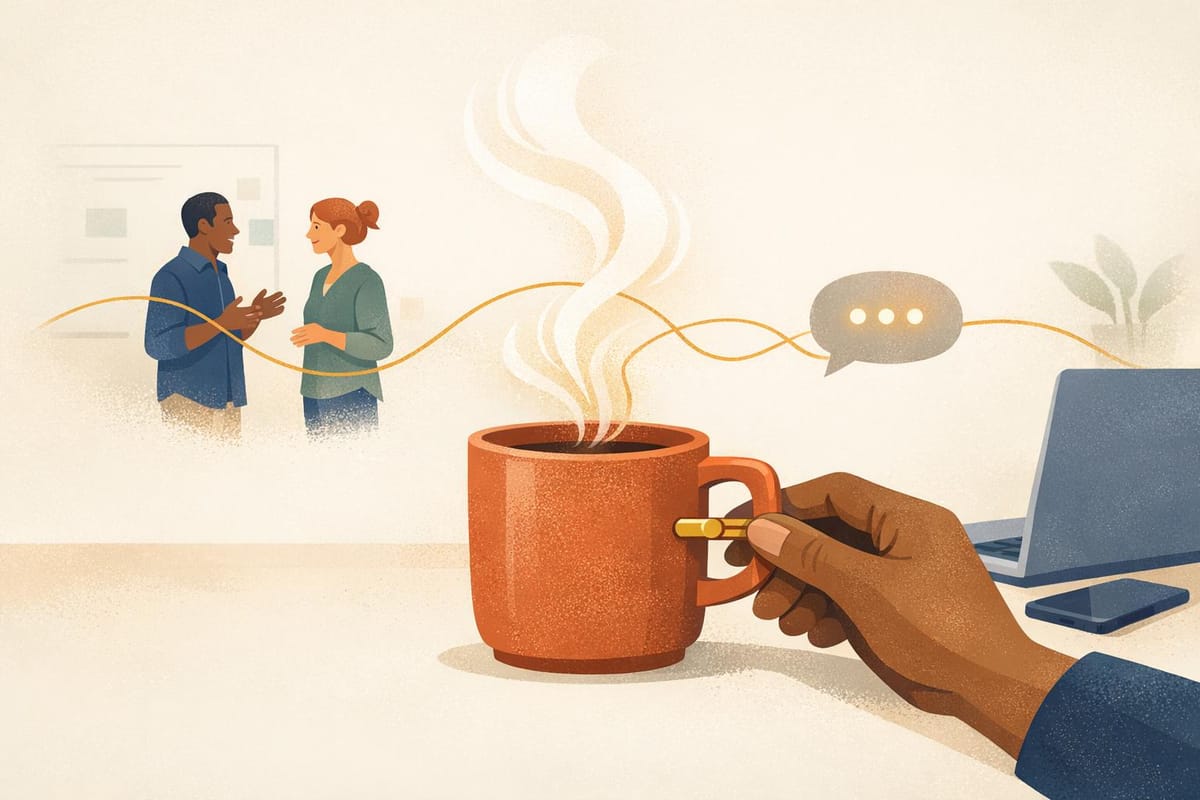
Informal communication - those spontaneous chats by the coffee machine or quick Slack messages - plays a vital role in building trust, solving problems, and keeping teams connected. While formal communication sets the framework for tasks, it’s these unplanned exchanges that bring plans to life.
Key insights from the article:
- Why it matters: 97% of employees say communication impacts daily performance, yet poor communication costs up to 2 hours of lost time daily.
- Where it happens: Coffee breaks, messaging tools like Slack, and team social events. Digital tools now replicate informal moments for remote teams.
- The benefits: Informal chats boost productivity, spark ideas, and strengthen relationships.
- The challenges: Rumours, exclusion, and accountability gaps can arise without structure.
- How to improve it: Leaders can encourage open dialogue, use tools like Slack Huddles or Donut bots for team bonding, and share personal stories to build trust.
Informal moments aren’t just “nice to have” - they’re the backbone of effective communication. With the right tools and mindset, you can make these interactions work for your team.
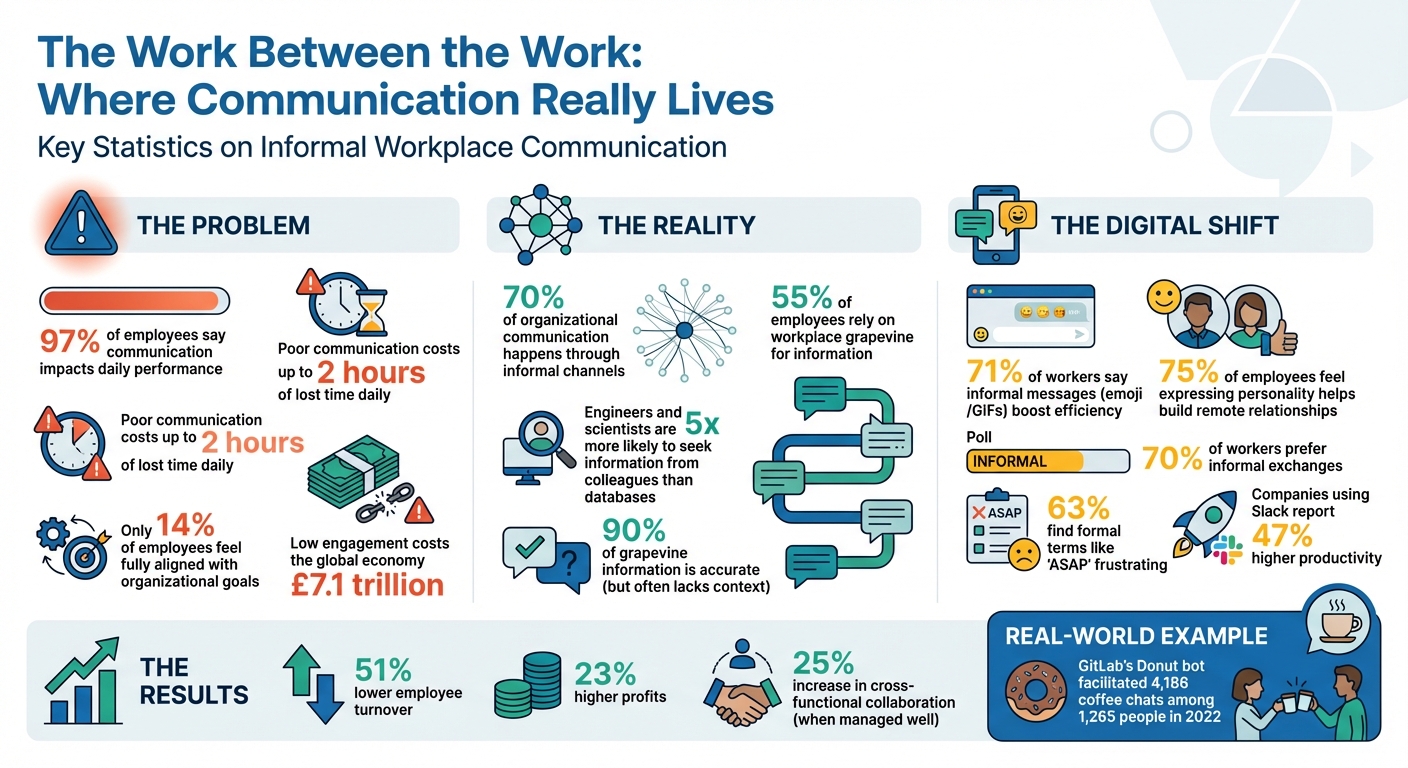
The Impact of Informal Workplace Communication: Key Statistics and Benefits
Informal Employee Chats - How They Can Help You Be a Better Manager
Where Informal Communication Happens
Informal communication thrives in the gaps between structured work activities, often popping up when you least expect it. Whether in person or online, these unplanned interactions play a crucial role in shaping workplace relationships and fostering collaboration. Let’s take a closer look at where these moments unfold.
Casual Conversations and Coffee Breaks
Moments like coffee breaks or hallway chats often have more impact on workplace dynamics than formal strategies. Blake Ashforth, a management professor at the W. P. Carey School of Business, captures this perfectly:
People construe the organisation through how they're treated at the tribal level so if your tribe isn't functioning well, the rest doesn't matter.
These "tribes" - the small groups of colleagues who chat over coffee or catch up in the kitchen - make abstract corporate goals feel tangible. Getting to know your teammates on a personal level can ease workplace stress, create goodwill, and help teams handle challenges more smoothly. These informal moments also break down barriers between departments, encouraging the exchange of ideas and fostering trust. Often, they’re where problems are solved before they even become issues.
Chat Tools and Messaging Platforms
In the digital world, tools like Slack and Microsoft Teams have become the virtual equivalent of watercooler conversations. They allow for quick, spontaneous exchanges that help maintain trust and connection, even when teams are remote. Research highlights their importance:
- 71% of workers say informal, concise messages - including emoji and GIFs - boost efficiency and productivity.
- 75% of employees feel that expressing their personality through these tools helps them build stronger relationships with colleagues while working remotely.
These platforms succeed because they add depth to text-based communication. Emoji, GIFs, and reactions can convey tone and intent, reducing misunderstandings. Ali Rayl, SVP of Product at Slack, notes:
Informal communication through modern collaboration platforms helps overcome perceived barriers between senior leadership and their employees, leads to transparent and informative discussions, and makes work more fun.
The impact is clear: companies using tools like Slack report being 47% more productive, largely because these platforms recreate the impromptu discussions that naturally occurred in physical offices.
Team Social Events and Gatherings
Social events - whether in person or virtual - are powerful ways to build team cohesion. For remote teams, these moments need to be thoughtfully planned. GitLab, a fully remote company, has embraced this with a "Donut" bot in their #donut_be_strangers Slack channel. This bot randomly pairs employees for 25-minute coffee chats, and in 2022 alone, it facilitated 4,186 coffee chats among 1,265 people. Co-founder Sid Sijbrandij explains:
Central offices are an expensive, inconvenient, and indirect way to facilitate informal communication. It is more efficient to directly organise informal communication.
The key to success lies in creating activities that feel authentic and flexible. Some teams host dedicated channels for shared interests like music or gaming, while others organise asynchronous events, such as virtual home tours or community projects. Even small glimpses into each other’s lives - like seeing a colleague’s pet or family during a video call - can humanise the experience and strengthen trust. These planned interactions, combined with everyday casual moments, weave a strong network of informal communication that supports collaboration and connection.
Benefits and Challenges of Informal Communication
Informal communication plays a crucial role in shaping workplace dynamics. By examining its advantages and hurdles, organisations can make the most of these interactions while steering clear of potential downsides.
Benefits: Building Connections, Boosting Productivity, and Raising Morale
Informal interactions often serve as the backbone of workplace communication. Studies reveal that around 70% of organisational communication happens through informal channels, commonly referred to as the "grapevine". For instance, engineers and scientists are five times more likely to seek information from colleagues than from formal sources like databases. These casual exchanges foster trust, dismantle silos, and help align teams with broader organisational objectives.
Teams that communicate informally tend to collaborate more effectively and resolve issues more quickly. Casual chats can also spark innovative ideas that might not surface in formal meetings. Employees who feel connected through such interactions are often more engaged. Considering that low engagement costs the global economy approximately £7.1 trillion, the importance of informal communication becomes undeniable.
That said, even the most beneficial informal exchanges can create challenges if not managed carefully.
Challenges: Rumours, Exclusion, and Accountability Issues
While informal communication has clear strengths, its unstructured nature can also lead to complications. For example, the same networks that foster trust can become channels for misinformation. Research shows that 55% of employees rely on the workplace grapevine for information. Although up to 90% of this information is accurate, it’s often exaggerated or lacks essential context. Ben Watson, Managing Director at Blue Goose, aptly notes:
Rumour swilling around is often symptomatic of bad management.
Another challenge is exclusion, particularly in hybrid or remote work environments. Informal "gossip chains" may unintentionally leave some employees out of key conversations, leading to feelings of isolation or undervaluation. Alarmingly, only 14% of employees report feeling fully aligned with their organisation’s goals, and nearly half of those who feel disconnected plan to leave their jobs within two years.
Lastly, the informal nature of these exchanges can result in accountability gaps. Decisions made during quick corridor chats or Slack messages often go undocumented, creating confusion later about who agreed to what. Without deliberate oversight, the very strengths of informal communication can backfire, turning it into a source of inefficiency and frustration.
How to Strengthen Informal Communication
If you’re aiming to tap into the benefits of informal communication, it’s not something you can leave to chance. As a leader, you set the tone for how your team communicates. To encourage openness and transparency, you need to actively model these behaviours yourself. Below are some practical strategies to help you create and nurture informal communication within your team.
Encourage Quick Feedback and Open Dialogue
The way we communicate at work is shifting. Research reveals that 63% of employees find terms like "ASAP" or "keep me in the loop" frustrating. On the flip side, 70% of workers prefer informal exchanges, and 71% say that short, emoji- or GIF-filled messages make their workday flow more smoothly.
Small tweaks can make a big difference. For example:
✓ Use emojis as quick reactions to messages instead of sending lengthy replies - this "reacji" method keeps communication efficient and uncluttered.
✓ Introduce short polls or anonymous surveys to get a pulse on team sentiment without the weight of formal reviews.
✓ Schedule audio-only huddles for unscripted, casual discussions. These mimic the tone of a desk-side chat and can help avoid miscommunication often caused by text.
Modern collaboration tools also help bridge gaps between leadership and employees, encouraging open and transparent conversations. Focus on creating systems that allow for genuine two-way communication. Actively asking for input from all levels of the organisation fosters a sense of ownership and builds a culture of openness.
Adapt Informal Channels for Hybrid and Remote Teams
Casual chats and social moments are essential, but they don’t happen as naturally in remote or hybrid setups. Without intentional planning, hybrid work can create a divide between in-office and remote employees. During the pandemic, cross-functional collaboration dropped by 25% as remote work narrowed interactions to immediate team tasks. Leaders need to design opportunities for informal connection in these setups.
"When working remote it is important to formalise informal communication. Explicitly plan time to create, build, and maintain social connections and trust".
Practical ideas include:
• Using automated pairing tools to encourage social interactions across teams.
• Ending meetings 5–10 minutes early to allow for casual pre-call conversations.
• Encouraging new hires to schedule short coffee chats with colleagues outside their immediate team to build their network.
For a fresh twist on virtual happy hours, consider activities like "Community Impact Outings", where team members volunteer locally and share photos of their experiences.
Even everyday interruptions during remote calls - like a pet wandering into the frame - can become bonding moments. Dedicated social channels, such as #pet-pictures or #book-club, also help team members connect on a personal level, which builds trust.
Use Storytelling to Build Trust and Connection
Storytelling is another powerful way to strengthen informal communication and foster trust. Just as casual chats can bridge gaps between departments, sharing personal stories can bridge gaps between leaders and their teams. When managers share their experiences, they appear more relatable and approachable, creating a safe space for employees to share honest feedback. This matters because more than 25% of workers feel they aren’t trusted by their employers.
Here’s how storytelling can work in practice:
• Add personal reflections to newsletters or company-wide updates.
• Share stories of challenges you’ve faced and how you overcame them to show vulnerability and ethical leadership.
• Highlight employees who embody company values - these "value heroes" set a powerful example for others.
Using multimedia formats, like video calls or recorded clips, can also bring stories to life by capturing expressions and tone that text might miss. Tools like Leadership Story Bank offer frameworks to help leaders craft and share meaningful narratives across the organisation.
The aim isn’t to force authenticity but to create regular opportunities for genuine connection. When leaders consistently show up as real people with real experiences, informal communication becomes a source of trust and collaboration rather than a breeding ground for confusion or gossip.
Tools and Metrics for Informal Communication
Digital Tools for Informal Interactions
Modern digital tools have transformed how teams connect informally, especially in remote and hybrid work settings. These tools bring a sense of spontaneity to virtual spaces, making informal communication feel more natural and accessible. Messaging platforms, for instance, allow conversations to be organised into dedicated channels - whether for specific projects, shared interests, or company announcements. Unlike email, these exchanges remain informal yet searchable and easy to revisit.
Features like audio and video chats replicate the casual desk-side conversations of traditional offices. Slack Huddles, for example, offer quick, drop-in audio or video calls that are perfect for follow-ups or onboarding. Amazon Web Services has embraced this feature, using it to maintain a natural flow of communication across large teams. Additionally, tools that allow for audio and video clips help add tone and emotion to messages, bridging the gap that plain text often leaves.
Visual elements like emojis, GIFs, and reacji (reaction emojis) also play a key role in informal exchanges. They help convey tone, reduce misunderstandings, and keep interactions light. At Oscar Health, custom emojis serve as read receipts for important announcements, cutting down on unnecessary replies like "got it" while ensuring everyone stays informed. Research supports this approach, with 71% of employees reporting that concise, visually enhanced messages improve efficiency.
Non-work-related channels also help foster connections. Channels like #dogs, #coffee, or #book-club provide employees with spaces to bond over shared interests, making remote work feel less isolating. Feedback tools such as Polly or Slack's Workflow Builder enable anonymous surveys and "Ask Me Anything" sessions, providing insights into team morale. Meanwhile, recognition features and dedicated appreciation channels allow teams to celebrate wins and acknowledge contributions in real time.
"Informal communication through modern collaboration platforms helps overcome perceived barriers between senior leadership and their employees, leads to transparent and informative discussions, and makes work more fun." - Ali Rayl, Senior Vice President of Product, Slack
These tools not only encourage interaction but also offer valuable data, paving the way for organisations to understand and improve their communication strategies.
Measuring the Impact of Informal Communication
With digital tools in place, organisations now have the ability to measure the effectiveness of informal communication. The goal isn’t surveillance but understanding what’s working and identifying areas for improvement. Start by tracking tool adoption rates - divide weekly active users by the total number of accounts. A healthy adoption rate typically falls between 70–80% within the first three months.
Sentiment surveys are another powerful metric, offering direct insights into how employees feel. Questions about connection to the company’s mission or willingness to recommend it as a workplace help calculate the Employee Net Promoter Score (eNPS). A score above 50 is a strong indicator of a positive workplace culture. For instance, GitLab uses a Donut bot to facilitate random coffee chats, and in 2022, they reported 1,265 employees participating in 4,186 chats - well above the norm for similar-sized companies.
Tracking cross-team interactions can also reveal whether informal communication is bridging silos or staying within immediate teams. Additionally, monitoring response times can highlight engagement levels; slower replies might indicate reduced team cohesion or morale.
The impact of measuring and improving informal communication is clear. Organisations that focus on this area see 51% lower employee turnover and 23% higher profits compared to those that don’t. To gain a complete picture, it’s essential to track both behavioural aspects (like frequency of casual chats) and emotional outcomes (such as whether these interactions create a sense of belonging). Together, these insights help determine whether informal communication is strengthening team dynamics or simply adding to the noise.
Conclusion: Making the Most of Informal Moments
Informal interactions play a huge role in shaping trust and team cohesion. Those casual chats, quick check-ins, and unplanned exchanges that happen outside formal meetings are what truly bring a team together. When communication falters, time is wasted, and alignment suffers, highlighting the need for more than just formal channels to keep things running smoothly.
The trick lies in deliberately creating opportunities for these informal moments instead of leaving them to chance. This could mean scheduling regular coffee chats, using digital tools to pair team members randomly, or setting up spaces for non-work-related conversations. For remote teams, this requires even more thought - social connections and trust don’t just happen; they need to be built and nurtured.
Start by leading by example. When leaders actively take part in informal conversations, share personal updates, or show vulnerability, it encourages others to do the same. Use available tools creatively - send quick video updates, use emojis to add tone to messages, or keep shared calendars open to signal availability. Also, don’t forget to document key decisions made during these informal chats to avoid misunderstandings, and address rumours promptly to maintain clarity.
Inclusivity is another essential ingredient. Break down barriers by hosting "Ask Me Anything" sessions, encourage collaboration through cross-department pairings, and ensure remote team members feel just as involved as their in-office counterparts.
Ultimately, these in-between moments are the backbone of a strong communication strategy. They foster trust, keep teams aligned, and build a thriving workplace culture. By modelling the right behaviours, leveraging digital tools effectively, and keeping track of important exchanges, you can transform these informal interactions into meaningful drivers of organisational progress.
FAQs
How can remote teams foster informal communication effectively?
Remote teams can encourage informal communication by deliberately crafting spaces for casual and spontaneous interactions, much like those that happen naturally in an office. Examples include creating chat channels for non-work topics, organising virtual coffee breaks, or celebrating personal milestones, like birthdays, via informal video calls.
Adopting a conversational tone in communication - such as using emojis, light-hearted language, or sharing personal updates - can also go a long way in building trust and familiarity. These small but meaningful gestures foster a sense of connection and teamwork, keeping remote teams engaged and collaborative despite the physical distance.
What are the risks of informal communication in the workplace?
Informal communication in the workplace can be a fantastic way to build rapport and share quick updates, but it does come with its own set of challenges if not handled carefully. One major concern is the spread of misinformation. Because these chats often happen on the fly, there’s a risk that incomplete or incorrect details might be shared, which can lead to confusion or even poor decisions.
Another tricky area is gossip or baseless rumours. These can erode trust, lower team morale, and spark unnecessary conflict. On top of that, without the structure provided by formal communication channels, messages can sometimes lack clarity or be misunderstood, creating friction or misunderstandings among colleagues.
To address these risks, organisations should promote a culture of openness and accountability. Informal conversations should work alongside, not replace, clear and dependable communication systems.
How can leaders encourage informal communication in a hybrid workplace?
Leaders can nurture informal communication in a hybrid workplace by offering opportunities for relaxed, spontaneous interactions that replicate the casual chats of a traditional office. For instance, hosting virtual coffee breaks, team quizzes, or setting up informal online spaces for sharing personal updates, photos, or friendly banter can create a sense of connection.
For hybrid teams, occasional in-person meetups or thoughtfully planned office days can deepen relationships and encourage the kind of casual conversations that build trust and camaraderie. Encouraging a culture that prioritises openness and interpersonal connections helps team members feel at ease when engaging both online and in-person, boosting overall communication and teamwork.