
Internal Communication Strategies for Crisis Narratives
Transparent, timely internal communication turns crises into trust-building opportunities by preparing teams, equipping leaders and prioritising employees.

When a crisis hits, your employees are on the front line, facing uncertainty and questions. Yet, many leaders neglect leadership communications, risking confusion and eroding trust. The key? Clear, honest messaging that prioritises employees and equips managers to lead effectively.
Here’s what you need to know:
- Preparation matters: Build a crisis communication team, pre-approve message templates, and test your systems regularly.
- Transparency builds trust: Share what you know, what you don’t, and what’s being done. Avoid polished PR - focus on clarity and relevance.
- Engagement is critical: Make leaders visible, encourage two-way dialogue, and tailor communication to different employee needs.
- Post-crisis reflection: Debrief, update your plans, and acknowledge team efforts to improve for the future.
A well-handled internal narrative can turn a crisis into a chance to strengthen your team’s resilience and trust.
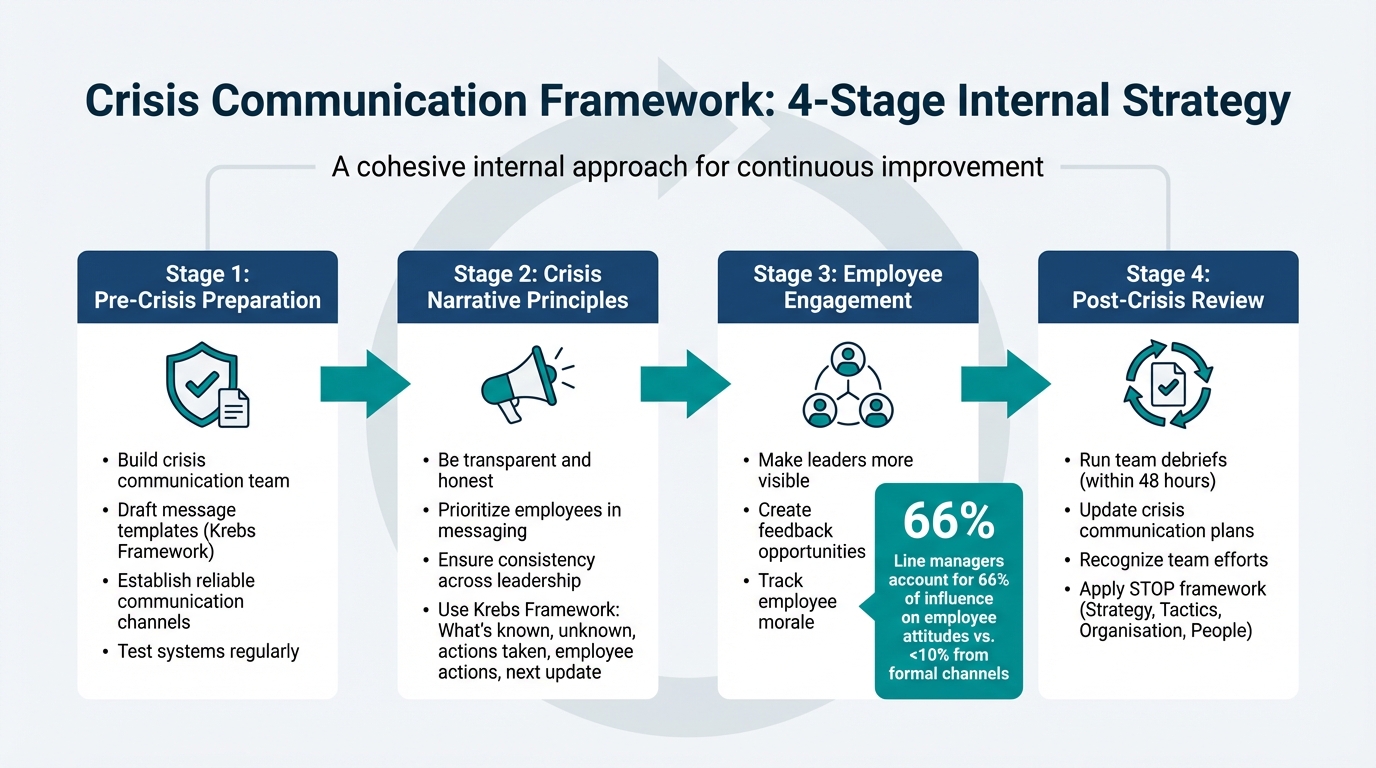
Crisis Communication Framework: 4-Stage Internal Strategy
Leading through crisis: communication strategies for leaders
Pre-Crisis Preparation: Setting Up Your Systems
Planning ahead is the cornerstone of effective crisis management. When a crisis strikes, having clear roles and established communication channels makes all the difference. Simon Baugh, Chief Executive of Government Communications, emphasises this point:
"Time is the most precious resource we have in a crisis. Doing the work in advance of a crisis to develop a strategy gives communicators more time to act decisively".
This groundwork is what enables organisations to act swiftly and with purpose when it matters most.
Build a Crisis Communication Team
The first step is assembling a dedicated crisis communication team, as effective communication is essential for successful leadership. Start by appointing a team leader - often referred to as an Incident Commander - who has the authority to make critical decisions without being bogged down by standard approval processes. This role requires strong executive backing to cut through red tape when every second counts.
Your team should include representatives from key departments like Human Resources, Legal, IT, Finance, Operations, and Communications. Clearly define and document the responsibilities of each member so everyone knows their role during a crisis.
It's also crucial to have backup personnel. Assign alternates for each role and maintain a list of subject matter experts who can step in based on the specific nature of the incident. Keep contact details stored securely in multiple formats - both digitally (in the cloud) and on physical cards. Implement a reliable alert system, whether through notification software, phone trees, or SMS, to ensure your team can be reached quickly and effectively.
Draft Message Templates Ahead of Time
Pre-prepared templates are invaluable during the early stages of a crisis, especially when key details may still be unclear. They help prevent errors and ensure that your messages remain clear, accurate, and appropriately toned under pressure. Collaborate with leadership and legal teams to pre-approve holding statements, eliminating delays during critical moments.
Use the Krebs Framework to structure your templates. This ensures your messages address:
- What is known
- What is not yet known
- What actions the organisation is taking
- What employees should do
- When the next update will be provided
This method not only keeps communications consistent but also positions your organisation as the go-to source for reliable information, reducing the chances of employees turning to external sources or rumours. Store these templates in a location accessible to the crisis team at all times, including outside office hours. Confirm that team members have the necessary permissions to deploy messages instantly across platforms like SMS, intranet, and email.
Establish Reliable Communication Channels
Your corporate intranet should act as the central hub for detailed updates, while SMS is ideal for urgent alerts. Group chats can facilitate quick, agile communication, and email works well for more comprehensive updates.
Before a crisis hits, audit all communication channels to ensure your team has proper access and that contact lists are up to date. Keep secure offline copies of essential information, including personal mobile numbers and email addresses, so you’re prepared even if the corporate network goes down. Regularly test your systems through tabletop exercises or live drills to identify and fix any weak points in your communication network. For employees without computer access, establish alternative methods such as physical notices or verbal updates.
These measures ensure that your internal communication remains dependable and effective, even as the situation unfolds.
Writing Your Crisis Narrative: Core Principles
Once you’ve got solid systems in place, the next step is crafting a message that resonates with your employees. Clear and honest communication is key - it can either strengthen trust or undermine it, especially in times of uncertainty. These principles will help you connect your strategic groundwork with leadership storytelling that steers your team through a crisis.
Be Transparent and Honest
Transparency isn’t just about sharing information; it’s about being upfront about what you know and what you don’t. If there’s uncertainty, acknowledge it openly instead of avoiding the topic or pretending to have all the answers. The Krebs Framework is a useful guide for structuring your communication:
- Share the facts you know.
- Highlight what’s still unclear.
- Explain what the organisation is doing to address the situation.
- Outline what employees need to do.
- Confirm when they can expect the next update.
This approach establishes your organisation as the go-to source of reliable information, reducing the risk of employees turning to rumours or external news. Honesty isn’t just a courtesy - it’s the foundation of credibility.
Prioritise Employees in Your Messaging
Using the channels you’ve already set up, focus your narrative on what matters most to your employees: their safety, their families, their jobs, and their wellbeing. A simple three-part format works well:
- Share the news clearly.
- Explain the reasoning behind decisions.
- Provide resources and invite feedback.
Studies show that when people are given accurate information during a crisis, they tend to respond rationally. Keep in mind that different groups within your organisation will have different needs. Non-desk workers, remote teams, and those in various time zones may require tailored communication. Make sure there’s room for two-way dialogue so employees can ask questions, raise concerns, and share updates about their own situations.
While transparency lays the groundwork, your messaging should directly address the immediate concerns of your staff.
Ensure Consistency Across Leadership
Conflicting messages from leaders can create confusion and erode trust. To avoid this, set up a clear process for approving communications and assign specific leadership roles (Gold, Silver, Bronze) to keep things aligned. Regularly scheduled meetings - often referred to as a "battle rhythm" - can help synchronise messaging with operational decisions across departments.
Equip managers with talking points and pre-approved responses to ensure they’re delivering the same message as senior leadership. Templates and holding statements prepared in advance can save time, while a quick-reference handbook detailing actions for the first hour, day, and week of a crisis ensures everyone knows what to do. Consistency is non-negotiable when trust is on the line.
Keeping Employees Engaged During a Crisis
Supporting your team during a crisis goes beyond simply sharing updates. It’s about fostering genuine conversations and staying tuned in to how people are coping. The way leaders engage during tough times often determines whether a team stays united or starts to fall apart.
Make Leaders More Visible
As a leader, being present - whether in person or virtually - can go a long way in reassuring your team. Your visibility signals commitment and helps ease anxieties. While written communications like emails and intranet updates are useful for sharing detailed information, verbal channels such as video updates and live town hall meetings are far more effective for energising employees and encouraging interaction. Briefly explain any new formats to keep things clear.
During the early stages of a crisis, increase the frequency of your communications. Weekly updates often strike the right balance, but meaningful leadership presence isn’t just about talking - it’s about listening. Encourage line managers to engage in direct conversations with their teams, as they play a critical role in shaping daily morale.
This kind of visible leadership creates an environment where open dialogue thrives, making it easier to gather and act on feedback.
Create Opportunities for Feedback
Providing multiple feedback channels ensures that every employee feels comfortable sharing their thoughts. Research during the COVID-19 pandemic highlighted that having safe spaces for feedback was among the top factors driving employee satisfaction.
Pulse surveys are a great tool to measure sentiment and assess when your team might be ready to move from crisis mode back to normal operations. Use your intranet’s digital forums to host Q&A sessions, where leaders can address questions and concerns directly.
Close the loop by regularly summarising the feedback you’ve received and outlining the actions you’re taking in response. Beyond general updates, personalise your approach - phone calls, informal check-ins, or small group discussions can provide deeper insights into how employees are really feeling.
Track Employee Morale
Keeping an eye on morale helps you spot potential issues before they escalate. Combine digital data, like email open rates, with insights from one-on-one conversations to get a well-rounded view.
Debrief immediately after significant events to gather real-time feedback. Regular check-ins by managers can uncover concerns that broad surveys might overlook.
"An engaged workforce has a direct impact on key organisational outcomes: profits, customer satisfaction, productivity, innovation, absence and turnover." – GCS Guidance
Test your communication systems to make sure they can still collect feedback during a network outage. Equip your crisis team to make quick decisions on internal messaging, ensuring your responses to employee concerns are timely and relevant.
After the Crisis: Review and Improve
When the dust settles, it’s tempting to move on and put the crisis behind you. But taking time to reflect on your response is what sets the stage for handling future challenges better. A candid review not only helps you address any shortcomings but also rebuilds trust and strengthens your organisation’s ability to weather the next storm.
Run Team Debriefs
Start with debriefs as soon as possible. Begin with a quick “hot debrief” within 48 hours to gather immediate impressions while details are still fresh. Follow this up with a more structured organisational debrief within two weeks. Bringing in an impartial facilitator - someone uninvolved in the crisis response - can help keep the discussion productive and focused on improving processes rather than pointing fingers.
"Get a neutral facilitator who is not the project manager or a member of the project team... This person can help take some of the emotion out of the meeting and redirect any lines of discussion that start to assign blame." – Amy David, Clinical Associate Professor, Purdue University
To keep discussions on track, share a feedback form in advance. Use specific questions to guide the conversation: Was communication consistent across leadership? Were remote or non-desk employees effectively reached? What unexpected challenges arose that your templates didn’t address? Encourage participants to use “I” statements to keep feedback constructive. If a process failed, map it out to pinpoint where things broke down. Wrap up by assigning clear action items with owners and deadlines, and share a summary report with everyone involved.
The insights you gather here will be the foundation for refining your crisis communication plans.
Update Your Crisis Communication Plans
Don’t let those lessons go to waste - use them immediately to fine-tune your crisis manual. Apply the STOP framework to evaluate and improve your Strategy (objectives and audience understanding), Tactics (channels and templates), Organisation (leadership roles and structures), and People (skills and well-being). Update holding statements to address any gaps and revise your risk register to account for new vulnerabilities. Test the updated plans through tabletop exercises to ensure they hold up under pressure. Give frontline leaders better tools and clearer instructions to handle future crises with confidence.
Recognise Team Efforts
After updating your plans, take time to acknowledge your team’s hard work. Host team meetings to publicly thank everyone and provide personal feedback to those who went above and beyond. Having senior leaders, including the CEO, send personal messages or address teams directly can make a big difference in morale. Follow through on any promises made during the crisis, whether that’s overtime pay, time off in lieu, or bonuses. Highlight exceptional performance in end-of-year reviews to ensure it has a lasting impact on careers. Finally, formally declare the crisis over - this gives your team the chance to pause, reflect, and transition back to normal operations.
Conclusion
When a crisis strikes, your internal narrative does more than just manage the fallout - it protects the team that will drive your recovery. The difference between a crisis that erodes trust and one that strengthens it boils down to three key elements: preparation, transparency, and genuine employee engagement.
These three elements form the backbone of an effective internal narrative. Preparation buys you precious time during a crisis, with pre-established frameworks enabling decisive action when it’s needed most. Transparent communication stops misinformation in its tracks by addressing three vital questions: what you know, what you don’t know, and what steps you’re taking. And engagement highlights a crucial reality: line managers and leaders account for around 66% of the influence on employee attitudes and behaviour, whereas formal communication channels contribute less than 10%. People want to feel heard, not just updated.
Trust is built when internal communication takes precedence over external PR. Every crisis is an opportunity to sharpen your approach and build the resilience needed for future challenges.
Once the immediate crisis has passed, the work doesn’t stop. Conduct debriefs, update your plans, and acknowledge those who went above and beyond. Refining your internal communication post-crisis is a vital part of your long-term strategy, tying back to preparation beforehand and engagement during. The aim isn’t flawless execution - it’s steady progress, resilience, and fostering a team that trusts you to be honest when it matters most.
FAQs
How can leaders maintain transparency during a crisis without compromising sensitive information?
Maintaining transparency in a crisis is a careful balancing act. It's about being open while safeguarding sensitive information. Share only verified facts, make it clear what is still under review, and avoid revealing anything that might jeopardise security, privacy, or legal requirements. Honesty goes a long way - acknowledging what you don’t yet know can build trust and help prevent rumours from spreading.
Here’s how to approach it:
- Identify sensitive information to determine what can be safely shared and what must remain confidential.
- Communicate confirmed details in straightforward, accessible language.
- Address uncertainties by being upfront, for example: “We’re still gathering details and will update you as soon as we can.”
- Provide regular updates on a consistent schedule to ensure everyone stays informed.
- Use secure, approved communication channels like the company intranet or official email briefings.
By embracing a clear, honest communication approach, leaders can build trust, safeguard essential information, and ensure their teams stay informed and focused during uncertain times.
How can leaders adapt communication to meet employees' needs during a crisis?
In times of crisis, employees’ concerns can vary widely depending on their roles and circumstances. To communicate effectively, it’s crucial to recognise and address these differences. For instance, frontline staff might prioritise immediate updates on safety measures, remote employees may need reassurance about job stability, and senior managers often look for strategic guidance. By segmenting your audience and tailoring your messages, you can ensure the information you share is relevant and meaningful to each group.
A variety of communication methods can help keep your messages clear and engaging. Use tools like the intranet or email for urgent updates, while live Q&A sessions or brief video messages are better suited for addressing more complex or sensitive topics. It’s also a good idea to empower line managers or subject-matter experts to share tailored messages with their teams. This approach not only makes the communication feel more personal but also helps build trust within the organisation.
Leaders can draw on resources like the Leadership Story Bank to create clear and empathetic narratives that reflect the organisation's values. Encouraging open dialogue, acknowledging emotions, and maintaining a professional yet approachable tone can go a long way in easing anxieties and fostering a sense of togetherness during difficult times.
What steps can organisations take to review and improve their crisis communication strategies after a crisis?
To refine and strengthen crisis communication strategies, organisations should carry out a well-structured debrief to gather key insights from the incident. This process should bring together all relevant stakeholders and focus on understanding what was effective, what fell short, and what can be improved. Setting a clear agenda is essential - it should include timelines, decision-making processes, communication methods, and feedback from staff. This ensures the review stays constructive, prioritising learning over blame.
The insights gathered during the debrief should be documented in a centralised repository for future use. Standard templates can help streamline this process, prompting targeted questions like, "Were our messages delivered to the right audience on time?" and "How did our tone influence employee morale?" Assigning responsibility for corrective actions and following up within a few weeks ensures these lessons translate into tangible improvements for the next crisis plan.
Leaders can take this learning a step further by reflecting on their personal experiences and turning them into stories that showcase resilience and growth. Tools like Leadership Story Bank can assist in shaping these reflections into meaningful narratives, helping to build a shared sense of purpose and preparing the organisation for future challenges.