
Consensus Building Frameworks for Change Leaders
Inclusive frameworks and storytelling help change leaders turn resistance into buy-in and lasting organisational alignment.
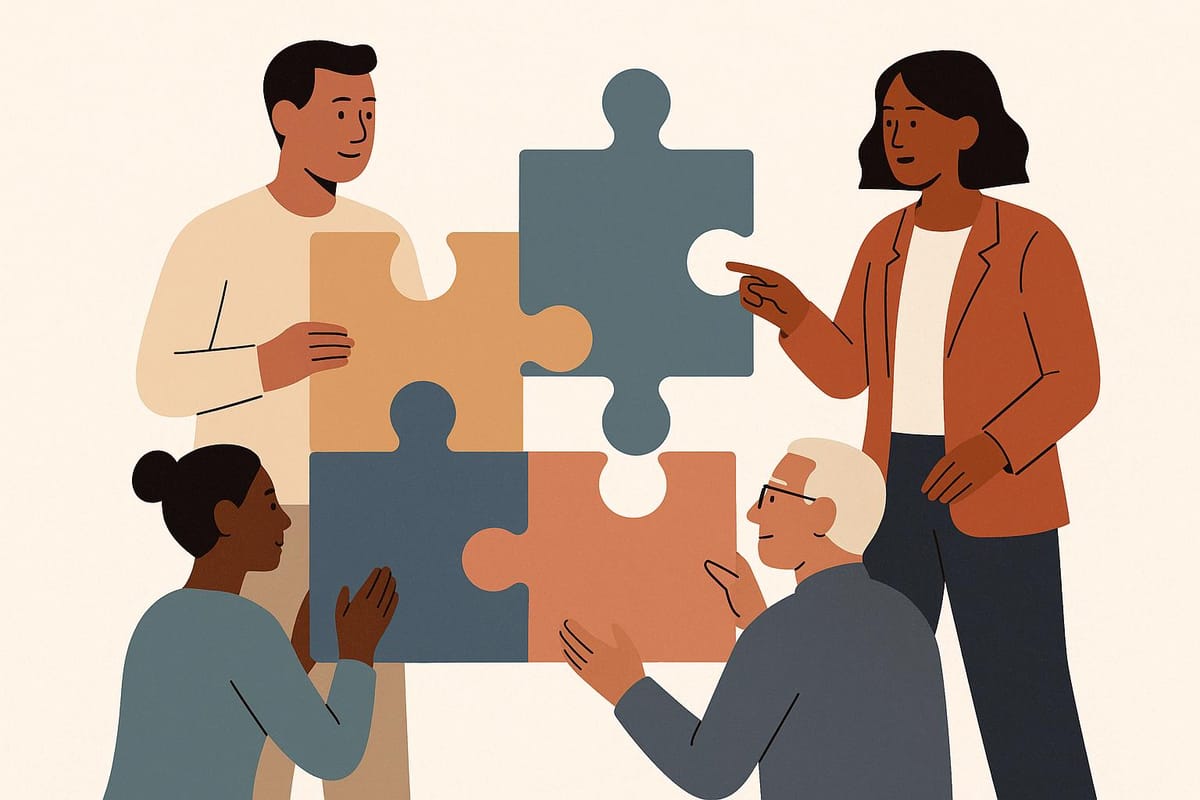
Consensus-building is the backbone of effective organisational change. Without it, even the best ideas can falter due to resistance, misalignment, or lack of trust. Successful change leaders focus on engaging stakeholders early, creating shared understanding, and ensuring decisions feel fair - even if they’re not perfect for everyone. This article covers practical frameworks, techniques, and storytelling tools to help you navigate complex changes while addressing common barriers like resistance, silos, and time pressures.
Key Takeaways:
✓ 5-Step Consensus-Building Process: Simple steps to align diverse groups, from convening stakeholders to implementing decisions.
✓ 8-Stage Model: A detailed approach for high-stakes, multi-stakeholder challenges, including joint fact-finding and agreement drafting.
✓ Practical Techniques: Active listening, structured dialogue, and prioritisation tools to keep discussions productive and inclusive.
✓ Storytelling: Craft narratives that connect emotionally, explain the “why” behind change, and inspire action.
Common Challenges Addressed:
- Resistance due to fear or uncertainty.
- Power dynamics and silos that stifle collaboration.
- Balancing urgency with the need for engagement.
By combining structured frameworks with storytelling, you can build trust, improve decision-making, and drive lasting results. Whether you’re leading a team or influencing stakeholders, these tools will help you manage change with clarity and confidence.
The Best Strategy for Building Consensus and Gaining Buy In
Core Frameworks for Building Consensus
Navigating change successfully often hinges on effective consensus-building. Leaders need structured approaches to guide diverse stakeholders through competing priorities, limited resources, and occasional disagreements. Below, we explore frameworks designed to turn varying perspectives into unified, actionable commitments.
The 5-Step Consensus-Building Process
The 5-Step Consensus-Building Process offers a clear roadmap, particularly useful for strategic decisions involving multiple groups. Think of scenarios like organisational restructures, major technology rollouts, or new operating models - where securing alignment is essential for success.
Here’s how it works:
-
Convening
Start by bringing all relevant parties into the conversation early. Identify everyone affected by the change - functions, levels, unions, customers, or partners - and map out their stakes. Brief surveys can help surface initial concerns and expectations, avoiding the pitfall of discovering key stakeholders too late. -
Clarifying responsibilities
Avoid confusion by defining decision rights upfront. Make it clear who decides: are you consulting before making the final call, or is this a joint decision? Assign roles - such as sponsor, facilitator, or subject-matter expert - and establish behavioural norms like maintaining confidentiality and ensuring all voices are heard. -
Deliberating
This is where the real collaboration happens. Use structured dialogue methods, like round-robin discussions or breakouts, to ensure everyone contributes. Visual tools like whiteboards or digital platforms can help cluster ideas and highlight shared interests. -
Deciding
Test for consensus using tools like a "gradients of agreement" scale, where participants rate their support from "fully support" to "cannot support." If full alignment isn’t reached, refine options to address concerns or document minority views while agreeing on a way forward. The aim is a decision everyone can support, even if it’s not their ideal outcome. -
Implementing agreements
Translate decisions into action by creating a plan that details responsibilities, milestones, and communication strategies. Build feedback loops with regular check-ins to adapt as needed. Celebrate early wins and visibly act on feedback to maintain trust and momentum.
This process works best for strategic, high-visibility decisions involving multiple groups or when rebuilding trust is necessary. For less critical or urgent decisions, leaders can adapt by focusing on key elements like clarifying responsibilities and conducting post-implementation reviews.
For more intricate changes, the next framework offers greater depth.
The 8-Stage Model for Consensus
When dealing with complex, multi-stakeholder challenges - such as cross-department initiatives, NHS partnerships, or collaborations between councils and private providers - the 8-Stage Model provides a detailed approach. This framework includes stages often overlooked in simpler models, such as joint fact-finding and agreement drafting, which are crucial when stakes are high, and data is contested.
The eight stages include:
-
Problem identification
Acknowledge that the issue requires collaboration rather than unilateral action. -
Stakeholder mapping and engagement decision
Identify all groups with influence or interest - unions, citizen groups, suppliers - and confirm their willingness to participate. Early engagement with consultative bodies like trade unions is often essential in the UK. -
Process design and ground rules
Establish the scope, timeline, decision rules, and confidentiality terms. Agreeing on these upfront prevents misunderstandings later. -
Joint fact-finding
Instead of presenting competing evidence, co-design the process for gathering and interpreting data. Agree on metrics, timeframes, and data sets, and consider involving independent analysts if trust is low. -
Interest and options exploration
Focus on underlying interests rather than fixed positions. Generate multiple options that address both shared and divergent needs. -
Negotiation and trade-offs
Compare options and explore compromises, such as phased approaches or compensations. For example, a council might phase in automation while guaranteeing retraining budgets. -
Agreement drafting and validation
Document commitments, timelines, and review mechanisms clearly. A written record helps avoid future misunderstandings. -
Implementation, monitoring and adaptation
Roll out the agreement, monitor progress, and adapt as needed, often through a joint steering group.
While resource-intensive, this model is invaluable when complexity is high, stakeholders have significant influence, and the risks of failure are severe.
For a different approach, visioning techniques can help align stakeholders by focusing on shared aspirations.
Visioning and Future-Focused Techniques
Visioning techniques provide an alternative starting point, focusing on a shared picture of success before diving into execution details. This approach shifts the conversation from defending current positions to co-creating a desired future, fostering more constructive compromises.
Encourage stakeholders to imagine the organisation or team three to five years into a successful change. Ask questions like:
- What does success look like?
- How do people work differently?
- What problems have been solved?
- What new capabilities are in place?
Encourage vivid, detailed descriptions. For instance, instead of saying "we’ll be more customer-focused", ask, "What does a customer experience on a typical day? How do staff interact differently?"
Have small groups develop future scenarios, then bring them together to identify common themes. This process often uncovers surprising alignment on goals, even when starting points vary.
Practical Techniques to Build Consensus
Turning theoretical frameworks into actionable strategies is the key to effective consensus building. Drawing from the 5-Step and 8-Stage models, the following techniques offer practical methods to engage teams during meetings and workshops.
Active Listening and Structured Dialogue
Active listening is the bedrock of consensus building. By genuinely listening, you create trust, encourage open communication, and ensure everyone feels heard - this naturally boosts participation in decision-making processes. It’s not just about hearing words; it’s about understanding and validating perspectives.
To prevent discussions from being dominated by the most vocal participants, consider using round-robin discussions. Here, each person takes turns speaking, uninterrupted, within a set time limit - say, two minutes. This approach ensures quieter team members have an equal opportunity to contribute. Clarifying questions can follow, but only after the speaker has finished.
Another helpful tool is silent brainstorming. Before tackling a divisive issue, ask everyone to jot down their thoughts, concerns, or ideas for five minutes. If trust within the group is low, collect responses anonymously. In more cohesive teams, participants can share their ideas directly. This method often brings forward insights from those who might be less comfortable speaking up, particularly those who process ideas internally.
Establishing clear ground rules at the outset is essential. These might include no interrupting, no dismissing ideas without discussion, and no personal criticisms. Leaders play a crucial role here by modelling openness - acknowledging their own uncertainties and showing they’re willing to adapt their views when presented with new evidence. For instance, paraphrasing someone’s concern in your own words not only clarifies understanding but also demonstrates genuine listening.
Active listening also helps uncover shared values and interests, making it easier to find common ground. Often, resistance to a proposed change isn’t about the idea itself but stems from worries about how it might affect workloads or disrupt existing priorities. These dialogue techniques pave the way for collaborative problem-solving, naturally leading to joint problem definition and prioritisation.
Joint Problem Definition and Prioritisation
Shifting the focus from individual problems to shared challenges changes the dynamic from competition to collaboration. When everyone sees an issue as a collective challenge, they’re more likely to work together on solutions. Consensus-building processes help create a shared framework for identifying and addressing these challenges.
Start by asking questions that highlight the broader impact, such as, “What happens if we don’t tackle this together?” or “How does this issue affect each department?” This reframing encourages a shift away from personal agendas and towards collective goals. For example, if one team is focused on cutting costs and another on increasing headcount, reframing the discussion around, “How do we meet our strategic goals without overstretching resources?” can encourage a more collaborative approach.
To prioritise effectively, tools like dot voting can be invaluable. Write all proposals on a visible list and give each participant an equal number of stickers (usually three to five). Participants can distribute their votes across multiple options or concentrate them on a single one. The resulting visual tally highlights group preferences, reducing the influence of dominant personalities.
Another practical tool is the impact/effort grid. This involves plotting options on a two-by-two grid, with “low effort” to “high effort” on one axis and “low impact” to “high impact” on the other. Together, the group can categorise initiatives. Quick wins (high impact, low effort) go in the upper-left quadrant, while strategic investments (high impact, high effort) belong in the upper-right. Meanwhile, options with low impact and high effort can often be deferred or avoided. These visual tools not only clarify trade-offs but also promote transparency and inclusivity in decision-making.
Retrospectives for Continuous Alignment
Retrospectives provide a structured way to reflect on past initiatives and drive improvement. Regularly holding these sessions helps build consensus by analysing what worked, what didn’t, and how to refine processes for the future.
A typical retrospective includes four phases:
- Set the stage: Create a safe environment and clarify the meeting’s purpose. Make it clear that the focus is on learning and improvement, not assigning blame. A check-in question like, “On a scale of one to five, how do you feel about our progress?” can help gauge the group’s mood.
- Gather data: Pose questions such as, “What went well?” and “What could we improve?” Use a whiteboard or digital tool to collect concrete examples rather than vague feedback.
- Generate insights: Look for patterns and root causes behind recurring issues. For example, if communication breakdowns are a common theme, dig deeper - was information shared too late, or were the right people not involved in key discussions?
- Decide what to do: Commit to specific, actionable steps. Replace vague goals with clear actions, like scheduling weekly updates or brief team check-ins. Assign responsibilities and timelines to ensure follow-through.
Leaders play a vital role in facilitating retrospectives. They should encourage honest feedback, ensure everyone has a chance to speak, and focus on systemic improvements rather than blame. These sessions ensure that consensus isn’t static but evolves alongside the organisation’s needs.
Overcoming Barriers to Consensus
Even with solid frameworks and techniques in place, achieving consensus during organisational change often encounters obstacles like fear, power dynamics, and time constraints. These challenges are usually systemic rather than personal, and leaders need to address them head-on to maintain collaborative progress.
In UK workplaces, resistance to change can often be subtle. It might show up as missed deadlines, disengaged participation in workshops, or polite agreement masking deeper scepticism. At times, regional offices may develop narratives that clash with head office messaging, and union or staff forums can become spaces where doubts are voiced loudly.
Addressing Resistance and Fear
At the core of most resistance lies fear and uncertainty. Employees may worry about job security, role changes, increased workloads, or a loss of status. If these concerns aren’t addressed, they can quietly grow into opposition that undermines even the best-laid plans.
Transparency is key. Start by clearly explaining the case for change, linking it to both the organisation’s strategy and employees’ day-to-day roles. Lay out the reasons, expected outcomes, and an indicative timeline. Be upfront about what’s known and what isn’t - ambiguity only breeds more anxiety. If redundancies are a possibility, acknowledge them and outline the support available, such as retraining or redeployment.
Consistency builds trust. Regular updates - fortnightly if possible, even if there’s no major news - help reassure employees, especially in organisations with strong employee representation. Pair these updates with two-way communication channels like Q&A forums, listening sessions, and line-manager briefings equipped with FAQs. Following up with visible "you said, we did" actions shows that employee input genuinely matters.
To spot resistance early, use tools like anonymous pulse surveys, stakeholder mapping, and skip-level meetings. Keep an eye out for behavioural signs such as increased absenteeism, quality issues, or more informal complaints - these can indicate brewing concerns. In workplaces where employees may hesitate to voice concerns openly, creating safe spaces for candid conversations becomes critical.
When resistance surfaces in discussions or workshops, respond with empathy. Active listening techniques - summarising what’s been said, validating emotions (e.g., "I understand why this feels unsettling"), and separating emotions from facts - can help diffuse tension. Reframe questions to promote collaboration. For instance, ask, "What would success look like for you after this change?" instead of "Why are you against this?".
Distinguish between concerns rooted in valid issues - like safety, fairness, or quality - and misunderstandings, addressing both directly. Where possible, give employees a voice in decision-making. Research shows that involvement in areas like scheduling, pilot programmes, or training formats reduces resistance and boosts commitment. Encourage hesitant employees to join design groups or user testing, turning potential blockers into active contributors.
The next sections explore specific strategies to tackle structural barriers that can hinder open dialogue.
Navigating Power Imbalances and Silos
Formal hierarchies and informal power dynamics often dominate discussions, sidelining quieter voices. In large or multi-site UK organisations, departmental silos can worsen the issue, creating an "us versus them" mentality that fractures understanding and commitment.
To ensure everyone has a say, redesign processes to separate voice from rank. For example, use structured rounds in meetings where everyone speaks once before anyone speaks twice - this prevents senior figures from dominating the discussion. Pre-meeting briefings or smaller group discussions can also help quieter team members refine their thoughts before sharing.
Digital tools like surveys, live polling, and virtual whiteboards can amplify input from junior staff, contractors, and under-represented groups who might feel hesitant to speak in mixed-grade settings. Establish clear participation rules - such as no interruptions, time limits for contributions, and rotating chair roles. As a leader, demonstrate openness by speaking last rather than first, signalling that all voices are valued.
Create cross-functional design groups that include members from various grades, locations, and departments - not just senior managers. Assign shared KPIs and joint sponsorship to these groups. For example, having operations and IT co-own a metric can encourage collaboration and reduce territorial behaviour. This approach shifts the focus from competing departmental interests to solving shared challenges.
Breaking down silos takes deliberate effort. Joint problem-definition workshops, where cross-functional teams map the current state and agree on shared outcomes, can help foster a broader perspective. Job shadowing and site visits between head office and front-line teams can also build mutual understanding and empathy. Shared retrospectives after key milestones allow teams to reflect together on what worked and what didn’t, creating opportunities for learning and improvement.
Finally, ensure messaging remains consistent across regions and business units. While local adaptations may be necessary, they shouldn’t result in conflicting narratives. When different parts of an organisation hear fundamentally different messages, trust erodes, and silos deepen.
Managing Time Pressure Without Shortcuts
Urgency is often unavoidable in organisational change. Regulatory deadlines, financial pressures, or competitive threats can create real time constraints, tempting leaders to skip inclusive processes in favour of a "decide and tell" approach. However, research shows that bypassing engagement increases resistance and risks implementation delays, often costing more time overall.
The key is balancing urgency with inclusion through structured, efficient processes. Time-box consensus-building activities and treat them as integral to your delivery plan. This mindset ensures engagement isn’t postponed until it’s too late to make a difference.
Focus your efforts where consensus truly matters - typically on strategic direction and core principles - while delegating quicker decision-making for implementation details. Tools like RACI matrices can clarify who needs to be consulted and who simply needs to be informed, avoiding over-consultation and decision paralysis.
Adopt a "safe to try" approach. Instead of waiting for a perfect solution, run quick experiments with clear review dates. Break the change process into phases, showcasing quick wins to maintain momentum while leaving room to adapt based on feedback. This phased strategy enables action and learning to happen simultaneously.
For fixed deadlines, such as compliance requirements, be transparent about external constraints and offer bounded choices. For example: "We must implement by March, but we can pilot in the North West first or roll out nationally with extra support - which would you prefer?". This approach preserves a sense of agency while working within tight timelines. Commit to post-implementation reviews to show that the process doesn’t end at go-live.
Maintain alignment without stalling progress by holding short, regular check-ins. Fifteen- to thirty-minute sessions with key stakeholders can be more effective than infrequent, lengthy meetings. Use decision logs to document who was involved, what options were considered, and why decisions were made - this reduces re-litigation and reassures teams that their input was valued. Simple heatmaps tracking stakeholder support and risks, updated monthly, can help focus engagement efforts where they’re most needed. Time-box discussions and adopt a "consent, not unanimity" approach - avoiding perfectionism and stalemates while ensuring concerns are documented and mitigated.
Storytelling also plays a crucial role in overcoming barriers. Personal stories of past changes - highlighting what went wrong, lessons learnt, and how those lessons guide current efforts - can build trust and psychological safety. Success stories from early adopters demonstrate tangible benefits, showing that "people like us" can succeed in the new way of working. Similarly, "day in the life" narratives for various roles post-change make abstract ideas more relatable, addressing specific fears around workload, autonomy, or flexibility.
Crafting impactful stories takes practice. Platforms like Leadership Story Bank can help UK leaders create narratives that resonate with diverse stakeholders, enhancing their ability to build consensus across the organisation. Combined with practical techniques, storytelling becomes a powerful tool for fostering shared understanding and commitment.
The Role of Storytelling in Consensus Building
While structured models provide a roadmap for decision-making, storytelling adds depth by creating emotional connections that are essential for building consensus. In times of organisational change, people need more than just project plans and timelines - they need to grasp the meaning behind the change, why it matters, and where they fit in. Stories have the power to unite diverse groups, transforming abstract strategies into relatable, concrete realities.
Research shows that stories are up to 22 times more memorable than standalone facts. When leaders rely solely on slides packed with KPIs or Gantt charts, they often overlook the emotional and identity-driven concerns that fuel resistance. In contrast, weaving data into a narrative that acknowledges emotions and aligns with shared values can inspire greater buy-in and commitment.
Storytelling resonates particularly well in UK workplaces, where employees often expect open and logical explanations for change. A well-crafted story informs and actively engages stakeholders, making them feel like co-authors rather than passive recipients of top-down directives. This emotional connection is key to creating compelling change narratives.
Crafting a Clear Change Narrative
A change narrative is essentially a story that explains the why, what, and how of change in a way that feels relatable and meaningful. It builds a shared understanding of the problem, outlines the vision, and maps out the path forward - all critical for achieving strategic alignment.
The narrative should begin by explaining why change is necessary, using relatable examples specific to the UK context. For instance, it might reference external pressures like NHS reforms, FCA requirements, or shifts in market competition. Use data sparingly but effectively: “If we continue down this path, in three years we risk X…” Then, describe the desired future state and outline the steps to get there. Concrete scenarios, such as a frontline worker switching to a unified system instead of juggling multiple platforms, can make abstract ideas more tangible. Be clear about what is changing, what will remain the same, and what is still undecided, while inviting staff input along the way.
To make the narrative resonate, incorporate core storytelling elements. This could involve focusing on real or composite characters - a customer in Manchester, a nurse in Birmingham, or a call-centre worker in Glasgow - so employees can see themselves in the story. Highlighting real challenges, such as balancing service quality with budget constraints, grounds the change in real-world dilemmas.
It’s also important to clarify the stakes. The story should outline the risks of not changing - such as losing contracts, falling service standards, or regulatory penalties - while also illustrating the benefits of change, like improved outcomes, more meaningful roles, and greater job security. By emphasising key decisions and collective choices, the narrative reinforces the idea that employees are active participants in shaping the organisation’s future.
Tailoring the narrative for different audiences - frontline teams, unions, middle managers, executive sponsors, and external stakeholders - is crucial. Adjust the language to suit each group while keeping the core message consistent to maintain trust and unity. Transparency is equally important when discussing the impact on people, whether it’s training opportunities, redeployment plans, redundancy processes, or support measures. Referencing UK-specific frameworks, such as consultation timelines and statutory procedures, adds credibility and clarity.
Using Stories to Build Empathy and Connection
Personal and organisational stories can help reduce resistance by humanising leadership and normalising emotional responses to change. When leaders share their own experiences - whether it’s being redeployed, learning new skills, or navigating uncertainty - it demonstrates vulnerability and authenticity, which can build trust and dissolve an “us versus them” dynamic.
Sharing stories from across the organisation can also foster empathy. For example, a narrative about how a new system improved safety in one department, paired with insights into financial pressures faced by another, can help teams appreciate different perspectives.
Highlighting past successes shaped by staff input - such as pilots redesigned after union feedback - reinforces the value of participation. Similarly, reflecting on moments when the organisation excelled, whether during a crisis or while innovating under pressure, strengthens a sense of shared purpose and connects the change to the organisation’s identity.
To gather stories at scale, consider using tools like story circles or listening sessions. You could also introduce “story prompts” during town halls or share short video clips on internal platforms. Encouraging middle managers to wrap up meetings with relevant anecdotes can help build a repository of stories for use in speeches, briefings, and broader communications. Embedding these narratives within structured processes maximises their impact.
Combining Storytelling with Frameworks
Storytelling is most powerful when it complements structured frameworks for consensus building, rather than being treated as a standalone tool. Merging emotional resonance with systematic approaches creates a more balanced and enduring alignment between data-driven strategies and human-centred narratives.
For instance, workshops or consultation meetings can begin with a story that illustrates a customer’s experience or a frontline challenge, grounding abstract discussions in reality. Using structured story prompts, such as asking participants to share examples of successful collaboration or past challenges, can reveal patterns that inform collective problem-solving.
Pairing stories with data bridges the gap between emotion and analysis. For example, presenting a key metric like error rates alongside a story about how those numbers affect real people makes the stakes more tangible. Similarly, using “future stories” to imagine what successful change might look like can help groups articulate and align on a shared vision.
Ending sessions with a “commitment story,” where participants share a concrete action they plan to take, links the narrative to behaviour and reinforces a sense of shared ownership. Repeating a consistent story across various platforms - such as town halls, team meetings, intranet updates, and one-to-one conversations - helps reduce misunderstandings and strengthens alignment. Simple, memorable phrases like “One team, one standard” can further reinforce unity and purpose.
Conclusion
Building consensus during organisational change isn’t about avoiding conflict or striving for universal agreement. Instead, it’s about fostering a transparent and inclusive process where everyone understands how decisions are made, feels genuinely heard, and commits to outcomes - even if those outcomes aren’t their ideal choice.
To achieve this, combine structured frameworks, practical techniques, and the art of storytelling. Frameworks like the 5-Step Consensus Process or the 8-Stage Model for Consensus provide a clear roadmap. Day-to-day techniques such as active listening, collaborative problem-solving, and regular retrospectives help maintain alignment beyond initial discussions. Storytelling, meanwhile, brings data and plans to life, creating a shared narrative that resonates emotionally and motivates action.
Research shows that greater strategic consensus among managers leads to stronger organisational performance by improving coordination and cooperation. Leaders who involve people early, communicate openly, and embrace diverse perspectives don’t just reduce resistance - they often uncover creative, sustainable solutions that no single group could have envisioned alone. While inclusive processes may take more time upfront, they often prevent costly rework, reduce conflict, and alleviate change fatigue later on.
Resistance, fear, and power imbalances are natural parts of the change process, not indicators of failure. The approaches outlined here are designed to navigate these challenges. Structured dialogue brings hidden concerns to the surface, while collaborative problem-solving ensures quieter voices are heard alongside the louder ones. With consistent application, organisations can improve their ability to manage these conversations, fostering a culture of participation that makes future changes smoother and more effective.
For UK leaders - whether in the NHS, local government, or other sectors - clarity, respect for diverse views, and open communication are essential. Whether you’re dealing with FCA regulations, NHS reforms, or market competition, the ability to build genuine consensus will directly impact how well your organisation adapts and thrives.
If you’re embarking on a change initiative, start by applying a consensus framework, practical techniques, and a well-crafted change story. Begin small - perhaps with a single team or project - and observe shifts in engagement, discussions, and outcomes. Use tools like pulse checks or qualitative feedback during retrospectives to measure alignment over time. This iterative approach ensures that consensus building becomes an ongoing leadership skill, not just a one-off effort.
Storytelling, in particular, can be transformative during change. Resources like Leadership Story Bank can help leaders craft narratives that inspire and influence effectively. By blending structured frameworks, actionable techniques, and the emotional pull of storytelling, you lay the foundation for meaningful alignment and lasting organisational change.
FAQs
How does storytelling improve consensus-building during organisational change?
Storytelling plays a powerful role in bringing people together by fostering emotional connections, highlighting shared values, and painting a vision that encourages collaboration. It helps leaders break down complex ideas, earn trust, and shape perspectives, making it easier for people to connect with and support change efforts.
When leaders incorporate stories into their messaging, they engage their audience on a more personal and meaningful level. This method not only helps align stakeholders but also builds commitment to common goals. By addressing concerns, closing divides, and ensuring everyone feels included, storytelling becomes a vital tool in navigating the challenges of change.
How can leaders address resistance and fear among stakeholders during organisational change?
To navigate resistance and fear during organisational change, leaders must focus on clear and open communication. Make sure everyone understands why the change is happening and how it could positively impact them. Taking the time to listen to concerns and addressing them with empathy helps build trust and eases uncertainties.
Involving stakeholders in key decisions can create a sense of ownership, making the process feel more collaborative and less intimidating. Sharing real-life success stories from similar changes can also boost confidence, showing what’s possible when things go well.
Regular feedback loops are another essential tool. They allow for honest conversations and ensure that everyone feels their voice matters, keeping the process inclusive and transparent.
What is the difference between the 5-Step Consensus-Building Process and the 8-Stage Model in managing organisational change?
The 5-Step Consensus-Building Process offers a straightforward, action-oriented method for leaders to secure agreement on specific decisions or initiatives. Its step-by-step structure makes it particularly useful for tackling immediate issues or achieving focused goals.
On the other hand, the 8-Stage Model adopts a wider, more strategic lens when it comes to organisational change. It leads leaders through various phases, including preparation, engagement, and maintaining progress, ensuring a deeper level of commitment and sustained outcomes. While the 5-Step Process is more tactical and streamlined, the 8-Stage Model serves as a comprehensive guide for managing complex, long-term transformations.