
Body Language in De-Escalation: Leadership Presence
Calm, controlled body language lets leaders defuse conflict, build trust and steer tense moments toward productive outcomes.

When tensions rise, your body language often speaks louder than words. Research shows that people judge a leader’s competence in less than 100 milliseconds, focusing heavily on non-verbal cues. In high-stress moments, your posture, tone, and facial expressions can either calm a situation or escalate it. Leaders who project calmness and control through their physical presence can help stabilise emotions and build trust, even in challenging scenarios.
Key takeaways:
- Body language dominates communication: 55% of communication is non-verbal, compared to 38% tone and 7% words.
- Calmness is contagious: A composed posture and steady eye contact can reduce tension and promote rational thinking.
- Practical strategies: Open posture, visible palms, and a calm tone can signal safety and authority.
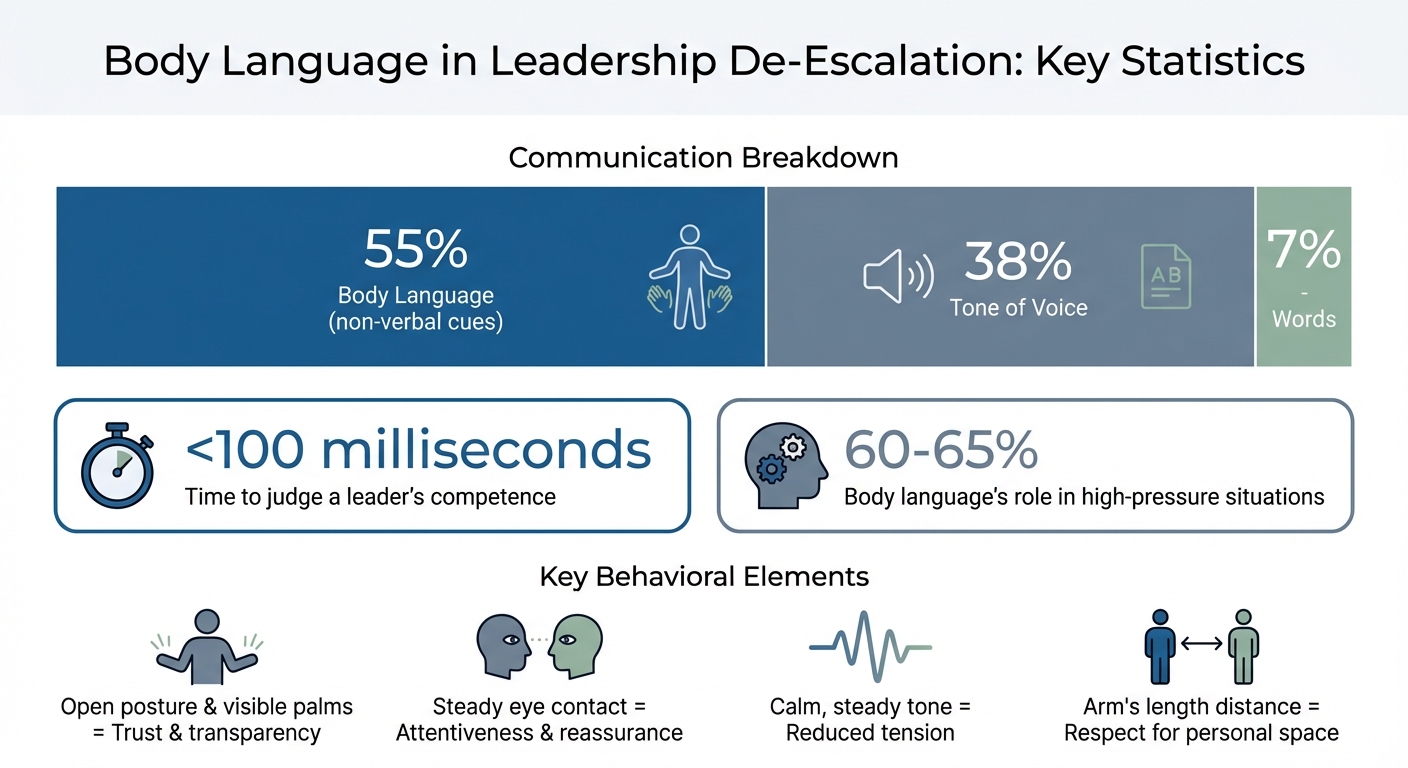
Body Language Communication Breakdown: 55% Non-Verbal, 38% Tone, 7% Words
Why Body Language Matters in De-Escalation
What De-Escalation Means for Leaders
De-escalation is all about diffusing tension and calming emotions before conflicts spiral out of control. For leaders, it means stepping into heated situations - whether it’s a disagreement between colleagues, a crisis meeting, or a tough conversation with a frustrated stakeholder - and creating an atmosphere where cooler heads can prevail. It’s about managing the emotional tone of the room so that rational thinking can take centre stage.
In the workplace, this often involves recognising when someone is feeling overwhelmed or threatened and responding in a way that conveys safety rather than danger. To do this effectively, leaders need to regulate their own emotions first and then project calmness and control to influence others positively.
This is where body language becomes crucial, as research continues to show its powerful role in communication.
Research Findings on Non-Verbal Cues in Tense Moments
Studies reveal that body language accounts for around 60%–65% of communication, and its importance only grows in high-pressure situations. In some scenarios, words contribute just 7% to the overall message, while 38% comes from tone of voice and a striking 55% from body language. Although the exact percentages may vary depending on the context, the core idea remains the same: your physical presence often speaks louder than your words.
"During volatile situations, body language can calm or escalate tension." - James Hourihan, Director, Timian
This happens because people naturally mirror the emotions they observe in others' facial expressions. If a leader appears anxious, they unintentionally spread that tension. On the other hand, a calm demeanour can help diffuse stress. The brain’s instinctive response to social cues, as explained by the SCARF model - Status, Certainty, Autonomy, Relatedness, and Fairness - makes us hyper-aware of non-verbal signals. Leaders who convey positive cues through their body language can help reduce the "fight-flight-freeze" response in others.
This research underlines how essential physical presence is to effective leadership, which we’ll delve into next.
How Body Language Shapes Leadership Presence
The way leaders carry themselves physically can be the difference between escalating tensions and restoring calm. Leadership presence isn’t just about charisma - it’s about projecting calm, control, and confidence even when others around you are unsettled. Non-verbal communication plays a central role here. A steady posture, consistent eye contact, and a calm tone send a clear message: "I’ve got this under control. You’re safe."
To achieve this, a leader must first manage their own body language. If you appear tense - through fidgeting, rapid movements, or an uneven tone - you risk amplifying the stress in the room. By calming your own signals, you not only prevent escalation but also keep your thinking clear and focused, which is critical for resolving conflicts effectively. When your body language aligns with your words, it builds trust. In contrast, mixed signals - like saying "I’m listening" while glancing at your phone - can create confusion and erode credibility.
The ability to align your physical cues with your intentions is a cornerstone of effective leadership, especially in challenging moments.
How to calm & de-escalate situations | JOE NAVARRO
Core Non-Verbal Behaviours for De-Escalation
Non-verbal communication plays a crucial role in shaping perceptions and diffusing tense situations. Here, we delve into specific behaviours that can enhance your ability to lead and de-escalate effectively.
Posture and Body Position
The way you hold yourself speaks volumes before you even say a word. Standing upright with your arms open or resting naturally at your sides signals approachability and a willingness to listen, avoiding any sense of threat or confrontation. This simple adjustment can help prevent defensive reactions in others.
Keeping your palms visible and facing upwards is another powerful gesture. It conveys honesty and transparency, fostering trust. Similarly, steepling your fingertips - lightly touching them together in a relaxed manner - projects confidence and control without appearing intimidating. These subtle shifts in posture can balance authority with approachability.
Physical space also plays a key role. Maintaining an arm's length distance helps avoid triggering the other person’s fight-or-flight response. On the other hand, gestures like crossing your arms, clenching your fists, or placing your hands on your hips can come across as defensive or even aggressive, and are best avoided.
These small but intentional adjustments can set the tone for a more constructive interaction.
Eye Contact and Facial Expression
Your face often does the talking before your words do. Research highlights that facial expressions significantly influence how others perceive your credibility and trustworthiness. A calm and composed expression can help diffuse heightened emotions, while negative cues - such as a furrowed brow or a clenched jaw - can unintentionally escalate tensions.
Balanced eye contact is equally important. Natural, steady eye contact shows attentiveness and can reassure the other person, helping to ease the situation. However, avoid staring intensely, as this may feel threatening. If you notice discomfort, adjust your gaze accordingly.
It’s also essential to avoid a rigid or overly neutral expression. When leaders minimise facial movement, it can be read as nervousness or even dishonesty. Instead, allowing for natural facial animation signals calmness and encourages others to mirror that state.
These facial cues work seamlessly alongside other non-verbal techniques to create a calming presence.
Voice Tone, Pace, and Volume
How you say something often matters more than the words themselves. In high-stress situations, a calm and steady tone can work wonders in reducing tension, while a raised or uneven voice may do the opposite.
Aim for a measured tone, speaking deliberately and at a controlled volume. Abrupt changes in pace or volume can heighten stress, so consistency is key.
Before attempting to calm others, it’s vital to manage your own emotions. Techniques such as naming your feelings can help you regain control and maintain a steady voice. A composed tone not only soothes but also steers the conversation towards constructive dialogue.
These vocal strategies, combined with thoughtful body language and facial expressions, form a holistic approach to non-verbal de-escalation.
What Non-Verbal De-Escalation Achieves
Non-verbal de-escalation isn’t just about calming tense situations; it also delivers tangible leadership benefits. Research indicates that when body language aligns with de-escalation techniques, it can significantly reduce both the intensity and duration of aggressive behaviours. This happens because people naturally mirror the emotions they observe, creating a ripple effect of calmness in challenging situations. Importantly, this isn’t about manipulation but about fostering an environment where productive, composed interactions can thrive.
Reducing Aggression and Resolving Conflict
A leader’s posture, facial expressions, and overall demeanour directly shape the emotional tone of a tense scenario. A calm, composed expression can help defuse heightened emotions, while negative signals - like a furrowed brow or clenched jaw - can unintentionally escalate tensions. De-escalation, as defined, involves "the use of communication or other techniques during an encounter to stabilise, slow, or reduce the intensity of a potentially violent situation without using physical force, or with a reduction in force". Respecting personal space, adopting a non-confrontational stance, and using sympathetic facial expressions signal that the relationship holds more value than the disagreement at hand. These gestures don’t just ease conflict - they also lay the groundwork for stronger trust.
Creating Trust and Psychological Safety
Non-verbal communication plays a crucial role in building trust and fostering psychological safety. Trust often emerges from metacommunication - the non-verbal signals that support or even override spoken words. Simple actions like maintaining a steady gaze, leaning slightly forward, and speaking fluently enhance a leader’s composure, which positively impacts team morale and commitment. A supportive stance - such as standing at an angle rather than directly face-to-face - makes a leader appear more approachable. Even thoughtful pauses or moments of silence can convey empathy more effectively than words.
Research Limitations and Context Factors
While non-verbal strategies offer clear advantages, their effectiveness depends heavily on context. Cultural differences, for instance, influence how personal space and eye contact are interpreted. What feels respectful in one culture might come across as distant or even confrontational in another. This variability highlights the limitations of rigid training models, which often fail to account for the complexities of real-world leadership. As Professor Judee K. Burgoon explains:
"the 'messiness' of studying communication under naturalistic conditions creates many measurement and design obstacles".
Additionally, gaps in research persist - particularly around non-verbal behaviours during negative feedback situations. This underscores the importance of leaders staying flexible and continuously refining their approach. The aim isn’t to achieve perfection but to make steady progress towards leadership that prioritises human connection and cultivates greater authority and presence.
Applying Body Language Techniques in Leadership
Small Actions That Signal Calm
The smallest gestures can convey a sense of calm and control. Maintaining an open, upright posture helps you avoid appearing defensive. Simple movements, like gently steepling your fingertips, project quiet confidence during meetings. Similarly, open palms facing downward can signal certainty in what you're saying. A steady, controlled voice with a deeper pitch and deliberate intonation adds to the impression of authority. Pausing for five to ten seconds before delivering a key point not only emphasises its importance but also gives the room a moment to focus. And don’t underestimate the power of a genuine smile - it can ease tension and create a more welcoming atmosphere. These subtle techniques lay the groundwork for adjusting your approach to suit different teams.
Adjusting Body Language for Different Teams
Tailoring your non-verbal communication to your audience is just as important as individual gestures. People's cultural backgrounds and personal comfort levels influence how they interpret body language. For example, while steady eye contact often conveys attentiveness, it might feel uncomfortable or even confrontational to some individuals. Likewise, the concept of personal space varies widely - keeping at least an arm's length distance is a good general rule to avoid triggering discomfort, but it’s crucial to remain sensitive to the preferences of your team. Cultural norms also play a role in how subtle cues are perceived, so being mindful of these differences helps avoid miscommunication. Leaders can also adjust their presence by "playing high" - standing firmly and taking up more space to assert authority - or "playing low" by leaning forward or adopting a more deferential posture to appear approachable.
Building Body Language Skills Over Time
Mastering non-verbal communication is an ongoing process that requires practice and self-awareness. Developing somatic intelligence - the ability to notice physical stress signals like tense shoulders before they become outwardly visible - can be enhanced through practices such as body scan meditations, Tai Chi, or Yoga. Viktor Frankl’s words offer a valuable reminder:
"Between stimulus and response there is space. In that space is our power to choose our response".
Seeking feedback from trusted colleagues can also accelerate your growth. Ask three people you trust to identify three strengths in your communication style. This can help you uncover natural behaviours to refine and build upon. Resources like Leadership Story Bank (https://leadershipstorybank.com) provide structured guidance for professionals looking to align their body language with a strong leadership presence. Progress takes time, but consistent practice and feedback will help you build trust and command respect in any leadership setting.
Conclusion
In tense moments, your body language becomes your most powerful communicator. When stress activates the amygdala, people stop focusing on your words and instead tune into your posture, facial expressions, and tone to assess whether you signal threat or safety. A neutral stance, steady eye contact, and calm tone can reassure your team, while tense shoulders or abrupt gestures can quickly escalate conflict.
To recap, the strategies explored - maintaining personal space, managing facial expressions, and adapting posture to context - are practical tools you can start using right away. However, building expertise in non-verbal communication requires consistent practice. Developing somatic awareness, such as through body scans, can help you recognise stress signals before they manifest.
As workplace anxiety and burnout continue to rise, de-escalation has become a critical leadership skill. Leaders who can self-regulate and project calm stand apart from those who simply react. Resources like Leadership Story Bank (https://leadershipstorybank.com) provide structured support to help align your non-verbal communication with your leadership presence.
While mastering these skills takes effort, the rewards are undeniable. A composed presence fosters the psychological safety teams need to thrive. Research shows that non-verbal cues play a decisive role in shaping team dynamics. By using your stance and tone to calm a room, you set the stage for exceptional performance. Start small, practise regularly, and watch your ability to lead under pressure grow.
FAQs
How can leaders use body language to defuse tense situations effectively?
Body language holds significant power in defusing tense situations, often speaking louder than words during stressful moments. A leader’s ability to project calm and control starts with maintaining a neutral, open posture. Relaxed gestures and avoiding movements like clenched fists or leaning forward can prevent unintentionally escalating tension.
Steady eye contact is another key component. When paired with a gentle, empathetic expression, it signals attentiveness and respect while steering clear of any confrontational undertones. The tone of voice matters too - speaking calmly and evenly reinforces the sense of composure reflected in your physical demeanour.
Personal space is also crucial. Maintaining an appropriate distance helps others feel at ease, ensuring they don’t feel crowded or overwhelmed. By combining these techniques, leaders can create an environment of safety and reduce emotional intensity, setting the stage for more productive conversations.
What non-verbal behaviours help leaders remain calm and approachable during tense situations?
A strong leadership presence isn’t just about what you say; it’s about how you carry yourself. Non-verbal cues can communicate calm, confidence, and approachability, often more effectively than words. Adopting an open and neutral stance - relaxed shoulders, feet positioned shoulder-width apart, and arms uncrossed - can immediately create a sense of safety and ease. Pair this with steady eye contact, a natural smile, and a relaxed facial expression to build trust and show authentic engagement.
Subtle gestures can also make a big difference. Open hands, measured movements, and an upright (but not stiff) posture convey confidence without coming across as intimidating. Adjusting your posture to suit the moment is key: assertive when the situation demands authority, and more relaxed when showing empathy. Breathing deeply and evenly, alongside maintaining a calm and steady tone of voice, reinforces a composed and reassuring presence that others will naturally gravitate towards.
How do cultural differences influence the way body language is interpreted in leadership?
Cultural norms heavily influence how body language is interpreted, and what feels natural in one context might send an entirely different message in another. Take direct eye contact, for example. In the UK, it’s often a sign of honesty and authority. However, in some East Asian or Middle Eastern cultures, maintaining prolonged eye contact with someone in a senior position might be perceived as disrespectful or even confrontational. Similarly, while a firm handshake is a common greeting in the UK, it might seem overly familiar in Japan, where a slight bow is preferred. On the flip side, a modest, reserved posture, which is valued in many collectivist cultures, may be viewed as a lack of confidence in more individualist societies.
These differences can create challenges, especially when trying to defuse tense situations. If leaders fail to recognise how their gestures or expressions might be interpreted, their efforts to de-escalate could backfire. It’s essential to adjust your body language - your gestures, stance, and facial expressions - to align with the cultural expectations of those you’re interacting with. Asking for feedback can also be a useful way to ensure your non-verbal cues are being received as you intend, helping to build trust and minimise potential misunderstandings within diverse teams.