
How to Align Messages Across Remote and In-Office Teams
Set clear channels, document roles, ensure equal participation and continuous feedback to align remote and in‑office teams and boost productivity.

Hybrid work is here to stay, but it’s not without its challenges. Miscommunication, unclear roles, and uneven participation often leave teams feeling disconnected. The good news? These issues can be solved with structured communication, clear documentation, and inclusive practices.
Key Takeaways:
- Set clear communication rules: Assign specific tools for different message types, from urgent chats to formal emails.
- Document everything: Record decisions, roles, and priorities in accessible shared spaces.
- Encourage equal participation: Make meetings fair for remote and in-office workers by using video-first setups and rotating leadership roles.
- Build trust through feedback: Replace annual reviews with regular check-ins and act on team input.
- Create shared culture: Use virtual events, informal chat spaces, and decision logs to connect everyone, no matter where they work.
By focusing on clarity, fairness, and connection, you can bridge the gap between remote and in-office teams, boosting alignment and productivity. Let’s dive into the details.
Hybrid Work Communication Statistics and Impact on Team Productivity
Boost Hybrid Team Performance & Engagement | Dr. Rochelle Haynes
Set Up Clear Communication Channels and Rules
When communication lacks structure, teams often fall into using a jumble of inconsistent channels. Remote workers might hesitate, unsure whether to send a quick message or draft a formal email, while in-office staff could assume everyone is already up to date from casual hallway chats. This confusion leads to scattered information, duplicated efforts, and growing frustration. To tackle these issues, leaders and communication must align to establish clear rules and assign specific roles to each channel. By doing so, you create a system where everyone knows where to go for what, reducing ambiguity and improving efficiency.
Start by mapping out which channels suit different types of messages. For instance, emails are best for formal announcements or external correspondence, while chat apps work well for quick clarifications or informal updates. Video calls should be reserved for discussions requiring nuance, such as brainstorming sessions or one-on-one conversations where tone and body language are key. Meanwhile, shared wikis or collaborative documents are perfect for storing reference materials like onboarding guides, HR policies, or project plans. When every tool has a defined purpose, the risk of losing important information significantly decreases.
Choose the Right Channel for Each Type of Message
Think about the urgency and audience size of your messages. For example, a system outage demands an immediate call or an urgent chat, whereas a project summary can be handled via email. If it’s a team-wide policy update, placing it in a shared document ensures it’s accessible without getting lost in a chat thread. Also, consider whether the message needs a real-time (synchronous) or delayed (asynchronous) response. For hybrid teams, asynchronous communication - using emails, recorded videos, or shared documents - should generally be the go-to approach, while synchronous methods like calls should be reserved for time-sensitive or complex issues.
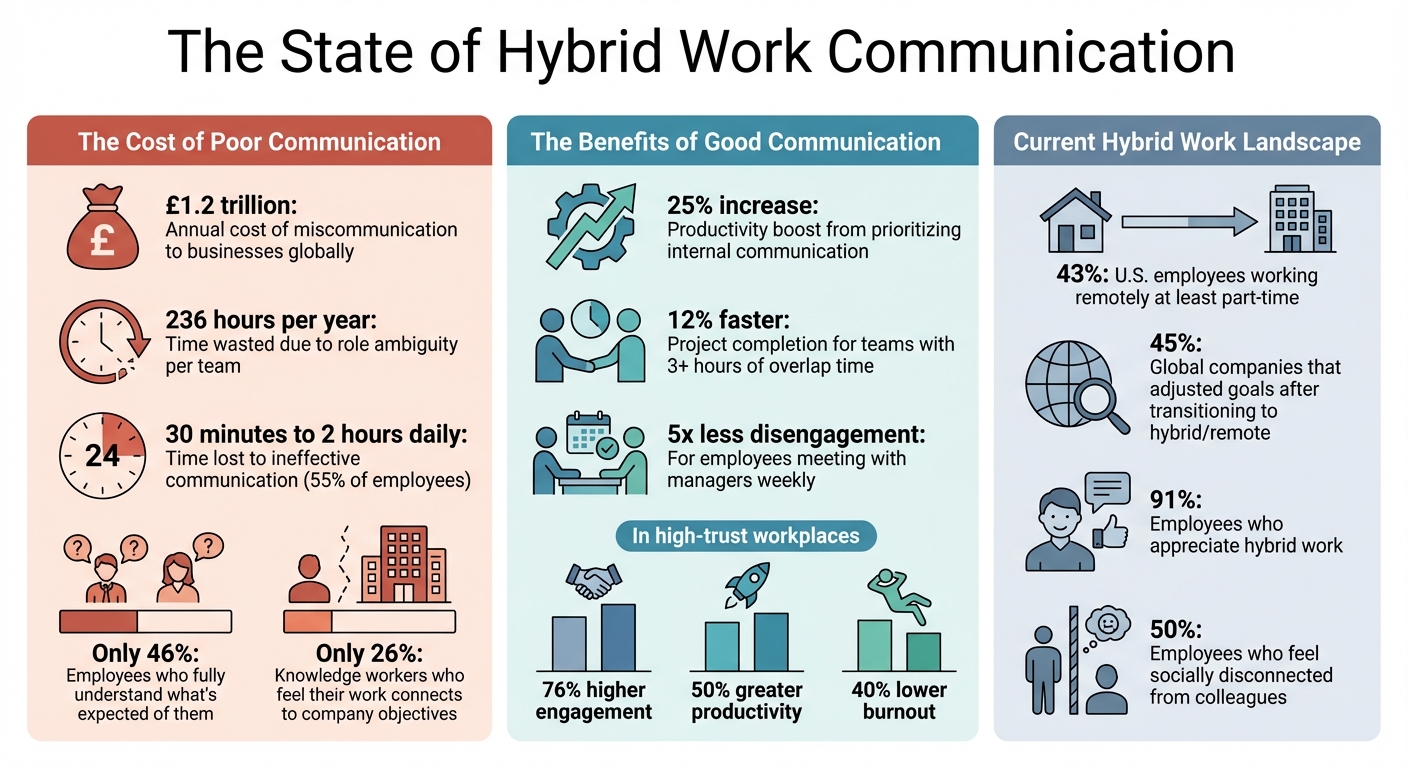
For teams working across time zones, setting "golden hours" can be a game changer. These are two- to three-hour windows where everyone is available for live collaboration. Studies indicate that teams with at least three hours of overlap complete projects 12% faster than those without. Outside these windows, asynchronous tools allow team members to work on their own schedules without feeling the pressure to be constantly online.
Set Response Time Standards and Availability Indicators
Unclear expectations around response times can lead to unnecessary stress. If someone doesn’t reply within an hour, it’s hard to know whether they’re busy or simply missed the message. To avoid this, set clear response time guidelines based on urgency. For example:
- Critical issues (e.g., system outages or client escalations): Respond within one hour.
- High-priority items (e.g., approvals or active project tasks): Respond within the same business day.
- Medium-priority messages (e.g., general questions or updates): Respond within 24 hours.
- Low-priority matters (e.g., FYIs or reference materials): Respond within 48 hours.
Additionally, use shared calendars and status indicators like "In a meeting" or "Focused work" to signal availability. For in-office teams, if spontaneous decisions are made, make it a habit to summarise these in a public channel so remote colleagues are kept in the loop. This small step ensures everyone, regardless of location, stays informed and connected.
Document Roles and Priorities for Everyone
When roles and priorities aren't clearly documented, teams can quickly lose their way. In fact, role ambiguity wastes up to 236 hours per year for the average team. The lack of clarity affects both remote and in-office teams, creating a divide between those who are informed and those left in the dark. Shockingly, only 46% of employees fully understand what's expected of them at work.
Having proper documentation acts as a shared reference point. When company goals, individual responsibilities, and communication standards are clearly outlined, it becomes easier for everyone to see how their daily tasks contribute to the bigger picture. Unfortunately, only 26% of global knowledge workers currently feel their work connects to company objectives. This gap becomes even more pronounced in hybrid work environments, where casual, informal conversations can't replace clear, written guidance. Without proper documentation, ineffective communication costs 55% of employees between 30 minutes and two hours every day.
Create a 'How We Communicate' Guide
A well-crafted communication guide eliminates unnecessary guesswork. It should clearly detail which tools to use for specific purposes, the expected response times based on urgency, and how to escalate issues appropriately. For example, define terms like 'end of day' with a specific time to avoid misunderstandings. Include guidelines on when to schedule live meetings versus when a recorded video or shared document will suffice.
This guide is especially helpful for onboarding new team members. They shouldn't have to wonder whether to use Slack or email or guess if their off-hours work will go unnoticed. Clear escalation procedures ensure that urgent matters are handled efficiently. Additionally, outline meeting etiquette - such as whether participants in hybrid meetings should all join from their own laptops to ensure fairness for remote attendees. Establishing these norms not only improves communication but also supports the regular updates of team priorities.
Communicate Company and Team Priorities Regularly
Building on clear communication practices, regularly documenting and sharing updated priorities keeps everyone aligned. With 45% of global companies adjusting goals since transitioning to hybrid or remote setups, maintaining clarity is essential. When priority changes aren't communicated effectively, teams risk wasting time on outdated tasks. To avoid this, set a reliable schedule for updates - whether through weekly digests, monthly all-hands meetings, or quarterly strategy reviews. Consistency is key, so employees know where and when to find the information they need.
Managers play a pivotal role in keeping employees aligned. Regular check-ins with team members can significantly reduce disengagement. Provide managers with templates and talking points to help them connect individual tasks to broader company goals. Employees who meet with their managers at least once a week are five times less likely to feel disengaged. Use a centralised platform - such as a wiki, project management tool, or shared document - to house all goals, roles, and processes. This ensures everyone, no matter where they work, has access to the same information and avoids the creation of information silos.
Make Sure Everyone Can Participate and Be Heard
In a hybrid work environment, it's essential to ensure that every team member feels included and their voice is valued. Hybrid setups can unintentionally create power imbalances. Those working in the office often benefit from being more visible, whether through casual hallway chats, spontaneous brainstorming, or simply being physically present. This can lead to in-office staff receiving more recognition for shared efforts, while remote workers may need to actively showcase their contributions to gain equal acknowledgment. Such disparities can weaken collaboration and harm overall team performance. These steps build on earlier strategies around leadership communications, focusing on making visibility and participation equally accessible.
"Hybridity is also inextricably tied to power - it creates power differentials within teams that can damage relationships, impede effective collaboration, and ultimately reduce performance."
- Mark Mortensen and Martine Haas
Leaders play a crucial role in addressing these challenges. They should keep track of where team members are working and take proactive steps to level the playing field. This might involve ensuring remote colleagues are considered for prominent projects, giving their ideas proper attention during meetings, and finding ways to include them in informal discussions that often happen organically in the office.
Get Input from All Team Members Equally
When even one participant joins a meeting remotely, consider hosting the entire session virtually. Even if several team members are in the same physical space, encourage everyone to use individual headsets and microphones. This helps prevent side conversations that could unintentionally exclude remote participants.
Dedicate a few minutes in each meeting for every team member to share their thoughts or raise concerns. This structured approach ensures quieter voices aren’t overlooked. Actively engage remote participants by addressing them by name and inviting their input, rather than waiting for them to speak up. Assigning a “Yoda” role can also be helpful - this person monitors engagement, highlights any silences, and asks questions like, “What’s being left unsaid here?”. Rotating meeting leadership regularly gives both in-office and remote members a chance to take centre stage, fostering a sense of inclusion and ownership.
Wrap up meetings with a brief “water cooler” session, lasting 5–10 minutes. This creates space for informal sharing of frustrations or ideas, mimicking the spontaneous chats that often occur in office settings. Additionally, offering digital office hours via video calls can replicate the convenience of dropping by a manager’s desk for quick questions or feedback. By prioritising equal participation, leaders build trust and open the door to more meaningful feedback in future interactions.
Account for Language and Cultural Differences
When planning meetings or assigning tasks, take into account factors like social status, language barriers, and time zones, all of which can impact participation. Recognise that non-native speakers may need extra time to process discussions. Providing asynchronous options - such as shared documents, recorded updates, or threaded discussions - ensures everyone can contribute at their own pace, regardless of time zone or language challenges.
Make it a habit to pause and review chat comments during meetings, giving less vocal team members a chance to be heard. Reassure participants that turning off their video occasionally for privacy reasons won’t affect their ability to engage. Creating an environment of psychological safety - where team members feel comfortable asking for help or admitting they feel out of the loop - is critical for fostering a truly inclusive team dynamic. These inclusive practices not only improve communication but also strengthen team cohesion over time.
Build Trust Through Openness and Feedback
Trust is the cornerstone of alignment, building naturally on clear communication and well-defined roles. It’s cultivated through consistent, meaningful interactions that show leaders are actively listening. When trust is established, employee engagement soars - from 1 in 12 to over 1 in 2, according to research. Hybrid work environments, however, call for deliberate efforts to replace the organic connections that naturally occur in an office setting. This is where structured feedback tools and intentional touchpoints come into play.
"Internal communication is everyone's job, and that communication works best when it's shared rather than centralised." - Slack
For feedback to be effective, it must flow in all directions - top-down, laterally, and bottom-up. This ensures every voice is heard and no valuable perspective is missed. Establishing a regular rhythm can help. For example:
- Daily micro-interactions: Quick acknowledgements on platforms like Slack.
- Weekly check-ins: Discuss goals, blockers, and progress.
- Monthly development chats: Focus on growth and skill-building.
- Quarterly reviews: Dive deeper into trends and overall performance.
This predictable cadence reduces anxiety around evaluations while keeping everyone aligned, without burdening the team with excessive meetings.
Set Up Regular Feedback Systems
Ditch the outdated annual reviews in favour of continuous feedback loops. Traditional once-a-year evaluations often feel disconnected and stressful, especially in hybrid or remote settings. Instead, use asynchronous tools to ensure everyone - whether remote or in-office - has an equal opportunity to contribute. For instance, tools like screencast recordings or dedicated feedback channels allow team members to share insights on their own schedule.
Automate pulse checks to gauge morale and surface blockers regularly. Keep these simple and focused with questions like, "What’s slowing you down this week?" or "What might I misunderstand about your working style?". Anonymous surveys are particularly useful for uncovering concerns that might not be raised openly. Quarterly retrospectives can also bring the team together to evaluate practices with a "Start, Stop, Continue" exercise - identifying new habits to adopt, old ones to drop, and strategies to maintain.
Encourage peer-to-peer feedback as well. In hybrid setups, where managers might have limited visibility into daily interactions, empowering employees to give direct feedback to one another is crucial. Equip your team with the right tools and training to make this process effective. To ensure nothing gets lost in the shuffle, document all feedback in a shared system, whether that’s performance software or centralised notes. This ensures fairness and keeps important insights accessible.
Respond to Feedback with Action
Feedback is only as valuable as the action that follows. When employees see their input acknowledged and acted upon, they feel more connected to both their work and leadership. Be transparent - openly address concerns and follow up with clear steps. Even when certain suggestions can’t be implemented, explaining the reasons behind decisions maintains trust.
High-trust workplaces see significant benefits: 76% higher engagement, 50% greater productivity, and 40% lower burnout rates compared to low-trust environments. Building this level of trust requires creating a psychologically safe space where team members feel comfortable sharing challenges or admitting blockers without fear of judgment. Leaders can foster this by being transparent about their priorities, acknowledging when they lack context, and normalising mistakes as opportunities to learn.
"Trust in the workplace increases speed and efficiency and, ultimately, performance." - Gallup
Shift accountability from activity to outcomes. Despite 43% of employees in the U.S. working remotely at least part-time, many leaders still measure productivity based on visibility rather than results. To counter this, assign clear ownership for tasks and define how performance will be evaluated. This approach prevents "social loafing" and ensures every team member knows what’s expected of them. When leaders are consistent in their follow-through, trust becomes the bedrock for all other efforts to succeed.
Build Team Culture That Connects Remote and In-Office Workers
Creating a cohesive team culture is crucial for uniting remote and in-office workers. Beyond clear communication and regular feedback, a shared culture helps bridge the divide between those working from home and those in the office. However, building this connection takes intentional effort - especially when team members aren’t in the same place. Without deliberate action, hybrid work can lead to uneven experiences. Office workers might benefit from impromptu hallway chats, while remote colleagues miss out on key context or wait hours for responses. The solution? Shift from office-centric habits to digital-first practices that include everyone from the outset.
Begin by identifying your current in-person rituals - like monthly breakfasts, Friday drinks, or birthday celebrations - and reimagine them as virtual events that bring your team together, no matter where they are. For instance, Slack’s London office successfully transformed its in-person traditions into digital gatherings. They used Zoom for main events and Slack for ongoing discussions, engaging over 30 participants in a way that felt seamless. These changes allowed remote workers to feel genuinely included, not just like spectators. By adopting digital-first approaches, you can create both structured practices and informal spaces that strengthen team bonds.
Establish Shared Team Practices
To ensure equal participation, make video-first meetings the norm. Even if some team members are in the same office, ask everyone to join from their own laptops. This approach ensures remote participants can clearly see faces, access chat features, and fully engage in discussions. Assign a remote advocate to monitor the chat and ensure that remote voices are heard. Additionally, using business storytelling for leaders to document decisions helps maintain a sense of connection across locations.
Keep track of everything important. Use decision logs to record what was decided, who was involved, and the reasoning behind it. This ensures remote workers aren’t left out of the loop when key information is shared informally in the office. For teams spread across different time zones, rotate meeting times to distribute the inconvenience of early or late calls fairly. Rebuild the “social glue” that distance can weaken by creating a recurring virtual social calendar - think trivia nights, cooking classes, or photo contests.
Use Informal Communication Spaces
Building relationships requires more than formal meetings. Set up dedicated Slack channels for non-work topics, such as #kudos for recognition, #milestones for celebrations, or spaces to share photos of pets or home workspaces. Tools like Donut can pair team members for virtual coffee chats, helping them connect beyond work tasks. You could also try interactive games like "Through the Keyhole", where team members guess whose home is featured in shared workspace photos.
Another idea is to host digital office hours - open Zoom calls where anyone can drop by to ask questions or have a casual chat. These mimic the "open door" policy of a physical office and can include brief moments after meetings for informal conversations. These small interactions make a big difference: while 91% of employees appreciate hybrid work, half of them report feeling socially disconnected from their colleagues. Informal spaces help bridge this gap, turning a group of individuals into a true team. By embedding these practices, leaders can ensure that every team member, regardless of location, feels connected and engaged.
Conclusion
Bringing remote and in-office teams onto the same page is no small task. It calls for clear systems, a strong sense of team culture and leadership storytelling, and regular check-ins. Miscommunication alone costs businesses a staggering £1.2 trillion annually, yet companies that prioritise internal communication can see productivity soar by 25%.
The way forward hinges on four key principles: clear communication channels, well-documented roles, equal participation, and trust built through open and honest feedback. As Superhuman aptly puts it:
"When you treat communication as strategic infrastructure instead of leaving it to chance, your hybrid team stops feeling fragmented and starts feeling unified."
While hybrid work has become the norm, achieving true alignment across teams remains a challenge. But this disconnect doesn’t have to be permanent. Leaders who embrace video-first meetings, appoint remote advocates, and document informal office discussions create a more level playing field. By focusing on results rather than hours logged at a desk, they foster trust. Teams that adopt shared practices - whether it’s maintaining decision logs or hosting virtual coffee chats - can build meaningful connections, even across physical distances.
The most effective leaders understand that communication strategies aren’t static. They evolve as team dynamics change. Reviewing practices quarterly helps pinpoint what’s working and what’s not, while pulse surveys uncover hidden friction before it impacts morale. As your team grows or adapts, revisit your communication charter and adjust meeting rhythms based on real engagement data - not assumptions.
FAQs
How can hybrid teams ensure everyone participates equally in meetings?
To promote equal participation in hybrid meetings, consider adopting a remote-first approach. Plan the meeting as if every attendee is joining remotely, even if some are physically present in the office. Use a shared screen and a single microphone to ensure everyone experiences the same sound quality and visuals. Distribute a clear agenda ahead of time so participants know when they’ll have the opportunity to contribute.
During the meeting, the facilitator should prioritise engaging remote attendees. This can be done by inviting their input first, using tools like chat or raise-hand features to manage contributions, and rotating responsibilities such as a 'meeting monitor' to encourage quieter team members to share their thoughts. Recording the meeting and incorporating visual aids, like slides or shared whiteboards, can also help maintain focus and engagement.
Fostering trust through regular one-to-one check-ins and informal virtual catch-ups can make team members feel more at ease when participating in larger group discussions. By embedding these habits, hybrid teams can build an inclusive atmosphere where everyone feels heard and valued, regardless of their location.
What are the best ways to build trust in a hybrid work environment?
Building trust in a hybrid work setting hinges on open communication and nurturing authentic relationships. Regular one-to-one catch-ups and team meetings - whether face-to-face or virtual - help create a steady routine and demonstrate respect for everyone’s time. Adding informal moments, like virtual coffee breaks or occasional in-office gatherings, gives team members a chance to bond beyond work, deepening connections and trust.
Leaders play a key role by ensuring honest and clear communication, sharing the reasoning behind decisions and tasks to avoid confusion. Collaborative tools, such as shared project boards or regular status updates, provide transparency on progress without resorting to micromanagement. Listening attentively, celebrating achievements, and appreciating contributions - whether from remote or in-office colleagues - further builds a sense of trust and belonging. By honing these approaches, leaders can foster a more connected and motivated hybrid team.
How can leaders ensure consistent communication and culture across remote and in-office teams?
To keep remote and in-office teams working in harmony, leaders need to prioritise clear communication, shared values, and inclusive practices. Start by clearly articulating your organisation’s purpose, core values, and expected behaviours in a way that’s easy for everyone to grasp. This ensures every team member knows what’s expected of them, regardless of where they work.
Establish clear communication channels tailored to specific needs: use instant messaging for quick updates, email for formal exchanges, and regular video meetings to keep the team aligned. Consistency is key - set up regular check-ins, like weekly one-to-ones or team retrospectives, to give everyone a chance to share their thoughts and stay connected to the organisation’s goals. Inclusive social activities, such as virtual coffee chats or hybrid celebrations, can also help build a sense of community and belonging.
Storytelling is another powerful way to strengthen team culture and purpose. The Leadership Story Bank is a valuable resource for helping leaders craft genuine stories that motivate and bring teams together, whether they’re in the office or working remotely. By integrating these stories into everyday interactions, leaders can nurture a unified and engaged team culture, no matter where their employees are located.